
Let's start with the timing gap
Here's the thing: arousal timelines rarely sync up. One partner is ready in five minutes. The other needs twenty. That gap isn't a problem to solve. It's a feature to work with. Most couples I work with treat slow arousal as a frustration or a sign something's wrong. It's not. It's just biology.
When one partner takes longer to build arousal, the usual move is to add friction, speed things up, or start with what you know works fast. Understandable. But that often leaves the slower-to-warm-up partner feeling rushed, and the faster partner feeling impatient. A lemon clitoral vibrator changes this equation completely.
Why arousal speed matters more than you think
Arousal isn't a light switch. It's more like a car engine warming up. Some engines run hot immediately. Others need time to reach operating temperature. Neither is better. But trying to drive an engine that isn't warmed up yet creates friction—literally and emotionally.
For many people, it takes 15 to 25 minutes of sustained stimulation before the clitoris fully engorges and the vaginal tissue begins to produce natural lubrication. That's not slow. That's normal. But when one partner is already halfway there and the other is at the starting line, tension shows up. "Are you into this?" "Why is this taking so long?" "Is something wrong?"
Nothing is wrong. You're just working with different timelines. A lemon vibrator—especially one with multiple intensity levels—lets you bridge that gap without anyone feeling abandoned or rushed.
How to use a lemon vibrator to sync arousal rhythms
Start before both of you are fully aroused. This is counterintuitive, but it works.
The partner who warms up faster can begin with low-intensity patterns (usually pattern 1 or 2 on a lemon clitoral vibrator) while you're still clothed or just getting started. The goal isn't orgasm yet. It's activation. You're introducing sensation gradually, so by the time you're fully engaged together, the slower-to-warm-up partner has already had 10 minutes of gentle stimulation building.
This does two things. First, it keeps the faster partner engaged and present during foreplay instead of waiting. Second, it gives the slower partner's body time to actually catch up without anyone checking their phone or feeling like something is off.
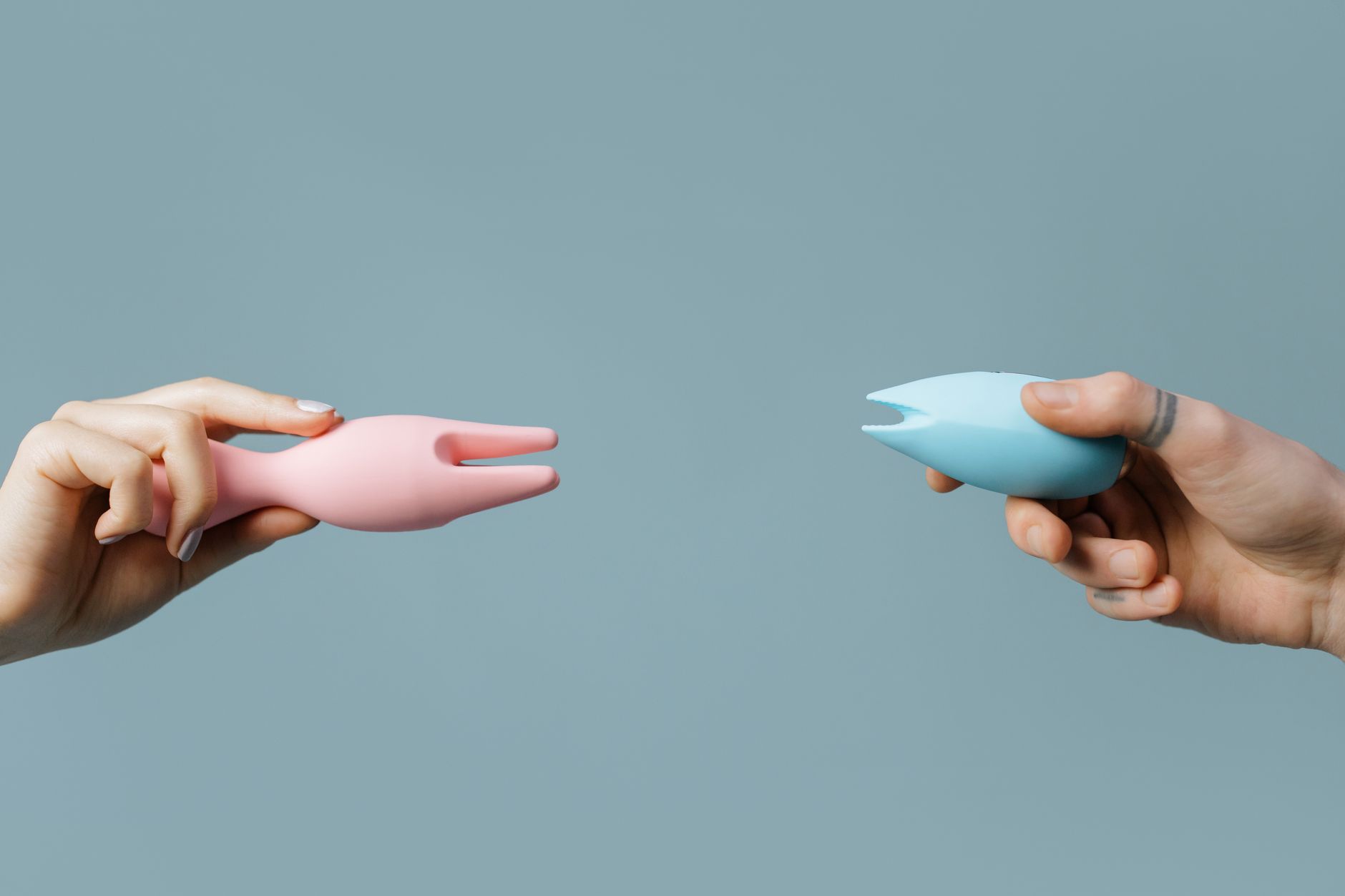
Photo by cottonbro studio on Pexels
The extended foreplay framework
When your partner needs more time to warm up, foreplay becomes the main event, not the opening act. Most couples rush foreplay. They treat it as something to get through before the "real" part. That mindset is why extended arousal feels tedious.
Instead, reframe it: extended foreplay is where the pleasure is. Here's a structure that works:
Phases 1 and 2 (First 10-15 minutes): Low-intensity exploration. Use the lemon vibrator on the lowest settings. Focus on the outer areas of the vulva. No goal. No rush. The faster-to-warm-up partner can be doing this to themselves or to their partner, depending on what feels connected. Many couples find it more intimate to take turns. One person leads for 5 minutes, then you switch roles.
Phase 3 (Minutes 15-20): Medium intensity and deeper involvement. Increase to pattern 3 or 4 (if your lemon vibrator has multiple speeds). Bring in touch elsewhere—nipples, neck, thighs. Maintain eye contact or physical closeness. This phase is where fantasy, dirty talk, or whatever builds arousal for your partnership shows up naturally.
Phase 4 (Minutes 20-25): Peak arousal. By now, the slower-to-warm-up partner should be genuinely ready. You can increase intensity further, shift to different areas, or bring in penetration if that's part of your dynamic. The lemon vibrator can stay in use or be set aside. The rhythm is already built.
Using sensation to extend connection
One of the best-kept secrets about lemon clitoral vibrators is that the suction pattern they use doesn't fatigue the clitoris the way direct vibration can. This means you can sustain arousal for longer without the sensation feeling numbing or overwhelming. That's especially useful when extended foreplay is the goal.
Rotate between direct lemon vibrator stimulation and manual touch. Alternate between your partner using it and you using it on them. Change the pattern every few minutes rather than blasting one pattern for 20 minutes straight. These micro-variations keep the nervous system engaged and prevent the plateau where sensation stops registering.
The slower-to-warm-up partner is also more likely to reach higher arousal levels if they're not watching the clock. When sensation is genuinely interesting and varied, time disappears. You're not enduring foreplay. You're in it.
Managing the emotional piece
Here's where couples often miss the actual problem. Extended arousal timelines work fine mechanically. But emotionally, they can trigger stuff.
The faster-to-warm-up partner sometimes feels rejected ("Why don't you want me the way I want you?"). The slower-to-warm-up partner sometimes feels pressured ("I'm holding you back"). Neither is true, but the narrative shows up anyway.
Using a lemon vibrator together—rather than one person using it on the other while passively waiting—shifts this. You're collaborating. You're solving the timing gap together. That's emotionally different. It feels less like accommodation and more like innovation.
Talk about it outside the bedroom first. "You take longer to warm up. That's not a problem. Let's figure out how to make that work for both of us." Then experiment together and notice what feels good, what creates connection, and what builds anticipation instead of frustration.
When partner-assisted stimulation changes the dynamic
Some couples find that the slower partner enjoys lemon vibrator stimulation more when their faster partner is actively involved—watching, touching elsewhere, providing feedback. Others prefer solo exploration while their partner handles their own arousal. There's no rule.
What matters is intention. If you're using a lemon clitoral vibrator specifically to bridge an arousal gap, make that explicit. "I want to make sure you have time to warm up without either of us feeling rushed." That framing transforms extended foreplay from a gap to close into a feature of your sex life.
For many couples, once you've solved the arousal sync problem, you realize you actually prefer longer foreplay. It's less intense. More sustainable. You can stay in that state together for 30 or 45 minutes without anyone getting overwhelmed. That's its own kind of pleasure.
When to adjust the approach
If after consistent use extended foreplay still feels frustrating for either partner, check in on a few things.
First: is the slower partner actually enjoying the process, or are they performing it to move things along? There's a difference. If they're genuinely not into extended foreplay, no tool will fix that. You'll need a different conversation about expectations and what each of you actually wants.
Second: are you using the right intensity levels? Some people need barely-there sensation at first. Others need medium intensity from the start. A lemon vibrator with multiple patterns helps because you can literally show your partner "this is what I need" rather than just describing it.
Third: is lubrication an issue? If the slower-to-warm-up partner isn't producing enough natural lubrication during extended foreplay, external lube absolutely helps. It removes friction—literally and psychologically. Add it early and refresh as needed.
If you've addressed all three and extended arousal is still a mismatch, consider talking to a couples therapist. Sometimes arousal timing differences are pointing at something deeper about desire, connection, or mismatched libidos. That's worth exploring with support.
People also ask
How long should foreplay last if one partner warms up slowly?
There's no universal timeline. For many people, 15 to 25 minutes of consistent stimulation is the window where arousal genuinely builds. Some people need 30 minutes. Some need 10. The goal isn't a specific duration. It's that both partners feel ready and connected when you move forward. Pay attention to actual arousal signals—increased lubrication, relaxation, genuine engagement—rather than watching the clock.
Can a lemon vibrator help if my partner has low desire overall?
A lemon clitoral vibrator is excellent for building arousal in the moment. But if your partner consistently has low desire—not just slower arousal, but genuine disinterest in sex—that's a different issue. That usually calls for a conversation about what's driving the low desire. It might be stress, hormonal shifts, medication side effects, relationship dynamics, or something else entirely. Tools help when arousal capacity is there but timing is off. When desire itself is absent, the conversation needs to go deeper.
Is it weird to use toys if we want to feel "natural" together?
No. A lemon vibrator isn't a replacement for your partner or for connection. It's a tool that creates better conditions for both of you to actually enjoy sex together. Lots of couples find that toys make sex feel less pressured and more playful. The "naturalness" most people actually want is ease and pleasure, not a specific method. If a toy creates that, it's not detracting from anything.
What if my partner takes forever to warm up but I get bored during foreplay?
That's the core tension. You need foreplay, your partner needs foreplay, but on different timelines. A lemon vibrator helps because you can engage yourself while also creating stimulation for them. You're not passively waiting. You're actively involved in your own pleasure at the same time. That keeps the experience connected rather than one person entertaining the other.
Can we use a lemon vibrator if we're not sure about couples' toys yet?
Start small. You don't have to jump to advanced toys. Some couples find it easier to begin with one partner using a toy solo while the other is present, then gradually bring it into partnered sex. Or use it during partnered sex but not directly on each other at first. There's no rule. If extended arousal is the goal and a lemon clitoral vibrator helps you both get there, that's the only thing that matters.
Does using a vibrator mean my partner doesn't find me attractive?
No. A partner needing extended arousal doesn't mean they're not attracted to you. It means their nervous system works differently. Attraction and arousal speed are separate things. In fact, if using a lemon vibrator together removes resentment from the arousal gap, most couples report feeling more connected and more attracted to each other afterward.
The bottom line
Arousal timelines are one of the most common friction points in couples' sex lives, and one of the easiest to fix once you stop treating it as a problem. Your partner takes longer to warm up. That's not a flaw. It's just how they're wired. A lemon vibrator—used intentionally and together—turns extended foreplay from something you endure into something you both actually enjoy. That's the shift that changes everything.
Ready to explore this together? Start the conversation outside the bedroom. Figure out what extended foreplay could actually look like if you both had permission to enjoy it. Then experiment. You might find that your favorite sex is the kind that doesn't rush.