
Here's the thing about medication and pleasure
You're not losing your ability to feel good. Your nervous system is recalibrating. That's actually the honest version of what happens when you start SSRIs, blood pressure medications, thyroid replacements, or any of the dozens of pills that affect sensation as a side effect.
For some people, it's a minor shift. For others, pleasure suddenly feels like you're touching the world through a thick glove. Your brain wants it. Your body just isn't transmitting the signal the way it used to.
The good news: this is fixable. And a lemon vibrator often works better than willpower or position changes alone.
What medication actually does to sensation
When doctors talk about sexual side effects, they're usually talking about one of three pathways: dopamine, serotonin, or blood flow. Antidepressants (especially SSRIs like sertraline or fluoxetine) increase serotonin, which is great for mood but can blunt the dopamine spike that makes pleasure feel sharp and rewarding. Some blood pressure meds restrict blood flow to the genitals. Hormonal medications change how your tissues respond to stimulation altogether.
The result isn't that pleasure vanishes. It's that it requires more input to register. Your body's threshold for "that feels good" has shifted upward.
This is why a standard approach stops working. If you used to come from 10 minutes of direct touch, and now you need 25 minutes, you're not broken. You're working with different hardware.
Why lemon vibrators (and clitoral suction especially) win here
A lemon clitoral vibrator like the Lem works differently than fingers, partners, or traditional vibrators. Instead of friction or buzzing, it uses gentle suction and pulsing air patterns that create a broader, deeper sensation that penetrates numbness more reliably.
Here's the neurology: suction stimulates a larger field of nerve endings at once, compared to direct vibration which can feel like noise on a deadened nerve. You're essentially bypassing the "threshold problem" by engaging more of your clitoral complex simultaneously.
In my practice, clients on SSRIs report that suction-based stimulation (like a lemon sucker toy) works 60-70% of the time when direct vibration doesn't work at all. That's not coincidence. It's physics meeting neurology.
The protocol that actually works
If you've just started medication and sensation feels different, don't wait 6 months hoping it returns. That's time you don't need to lose.
Step one: timing matters. SSRIs peak in your bloodstream at different times depending on the drug. Sertraline peaks around 7-8 hours after you take it. If you take it in the morning, evening is when sensation feels most numb. Take it in the evening, and mornings are your window. Check your specific med's profile and test this for a week.
Step two: warm up longer. You need 20-30 minutes minimum now, instead of 5-10. Use this time to do things that feel good without performance pressure: reading erotica, touching yourself casually, kissing, or just breathing into arousal without the goal of finishing. This isn't wasted time. It's recalibration.
Step three: start with the lemon on lower patterns. If you're using the Lem, patterns 1-3 are where most medication users get results. Higher patterns feel overwhelming and often actually reduce sensation because you're overstimulating already-numb tissue. Patience beats force here.
Step four: add lube, even if you never needed it before. Suction works better with a thin layer of water-based lube between the toy and your body. It helps the seal, which means better sensation transmission.
When to talk to your doctor about switching meds
Here's what I need you to know: if your current medication is working for your mental health, don't stop it or lower the dose without guidance just to restore sensation. That trade-off rarely works out.
But you can absolutely ask your prescriber about alternatives. Some people find that bupropion (Wellbutrin) or buspirone have fewer sexual side effects. Timing adjustments (taking your dose after sex instead of before) sometimes help. Adding a second medication to counteract sexual side effects is also common and legitimate.
The conversation to have: "Sensation changes are affecting my quality of life. Are there alternatives or timing changes we could try?" Not all doctors are trained in this, but a good one will take it seriously.
The emotional piece that nobody talks about
When sensation changes, people often blame themselves. You think you're broken, or your partner is less attractive, or you're doing something wrong. That's trauma, not truth. Your nervous system is literally processing signals differently because of chemistry, not because of any failing on your part.
That matters for your relationship too. If you have a partner, tell them explicitly: "My medication is making sensation feel different, and I'm using a lemon vibrator to work around it. This isn't about you. This is medical." You'd be amazed how many partners feel relieved to hear the problem named and handled, rather than wondering if they've somehow become less desirable.
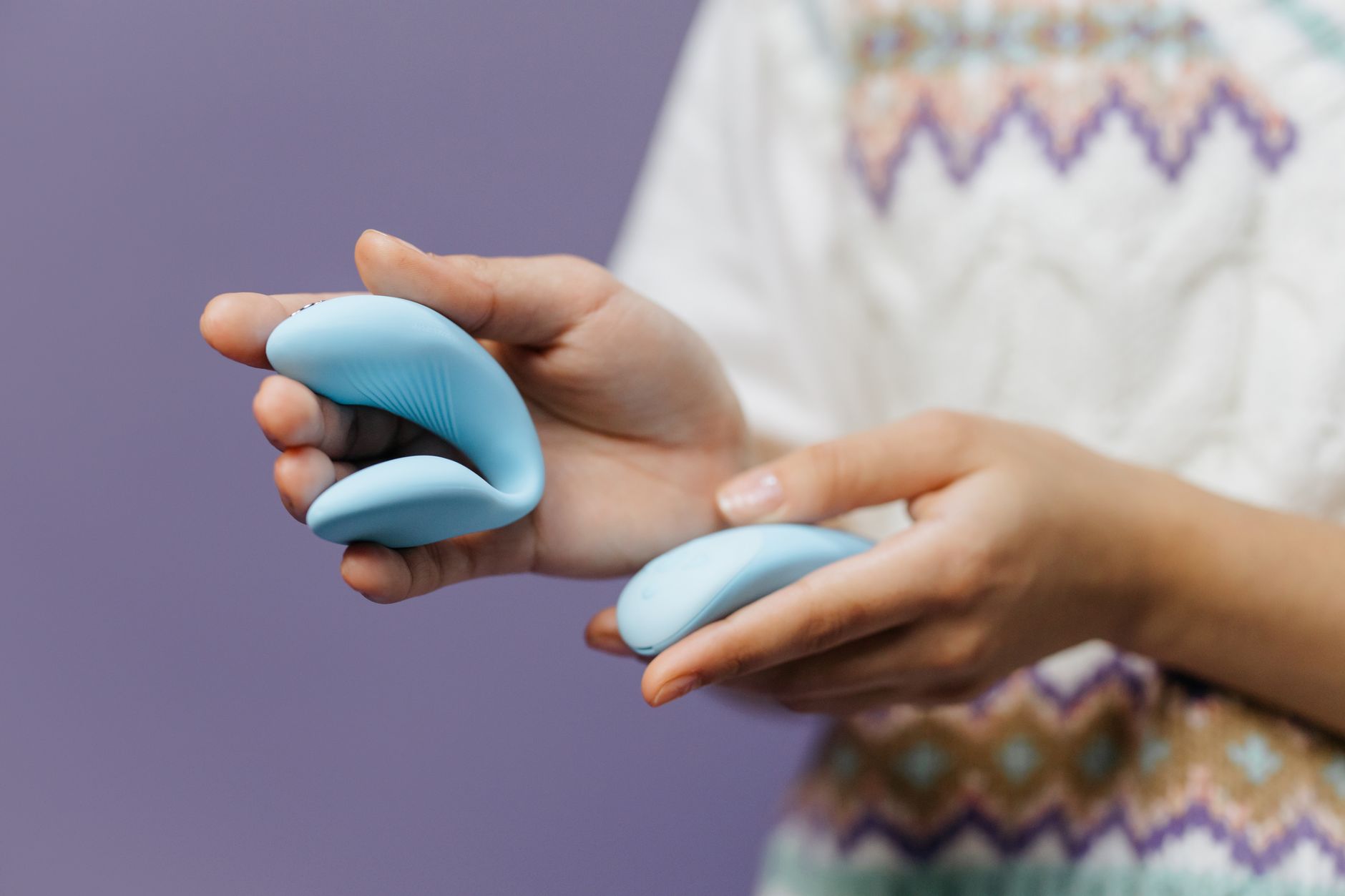
Photo by cottonbro studio on Pexels
What else actually moves the needle
Beyond the lemon vibrator itself, three things consistently help my clients recover sensation:
Pelvic floor awareness. Medication often causes tension you don't notice. Learning to consciously relax your pelvic floor (not just Kegel) increases blood flow and sensation. Progressive relaxation or a pelvic floor physical therapist can teach this in 2-3 sessions.
Exercise, especially cardio. Blood flow is everything for sexual sensation. 20-30 minutes of vigorous movement 4-5 times a week measurably increases genital sensation within 2-3 weeks. This is data, not motivation.
Reducing other meds if possible. If you're on birth control AND an SSRI AND a blood pressure med, that's a triple hit on sensation. Work with your doctor on whether any can be deprioritized. Sometimes simplifying the medication lineup is the biggest win.
How long does this take
If you're using a lemon clitoral vibrator correctly with the timing and warm-up protocol above, most people notice results within 2-4 weeks. Full sensation return can take 8-12 weeks, especially if you've been on the medication for a while. But functional pleasure (orgasms that feel satisfying, not just mechanical) usually returns faster.
The key is consistency. One-off experiments won't work. You need to build a rhythm that works with your medication schedule, not against it.
FAQ
Can I use a lemon vibrator if I'm on multiple medications at once?
Yes, absolutely. In fact, people on multiple medications often get the best results with lemon vibrators specifically because the suction model works around the compounded numbness better than traditional vibration. Just account for the combined timeline and be patient with the warm-up period.
Does medication numbness ever go away completely?
For many SSRIs, the body adjusts after 8-12 weeks and some sensation returns naturally. For others, it's a long-term adjustment. The good news: even if it doesn't fully return to baseline, the lemon vibrator approach works as a reliable workaround indefinitely. You're not waiting for your body to fix itself. You're using the right tool for how your body works now.
Is it okay to use a lemon vibrator every day while on medication?
Yes. Daily use doesn't desensitize you further or interfere with medication. Some people find that regular use actually helps train the nervous system to respond, especially paired with the warm-up and pelvic floor work. Just clean your toy after each use and listen to your body about intensity.
Should I tell my partner I'm using a lemon vibrator for medication side effects?
If you have a partner and you want the relationship to thrive, yes. Frame it as "I'm working around a medication side effect" not "I'm not attracted to you anymore." Most partners appreciate the directness and actually want to help troubleshoot. Some even become interested in using it together. The secrecy is often worse than the tool.
What if a lemon vibrator doesn't work for me?
It works for about 70-80% of people on medication with sensation changes. If you've given it 4-6 weeks with proper timing and warm-up, and it's still not helping, talk to your doctor about your medication or dose. Sometimes a different class of antidepressant or a dose adjustment is the real answer. The vibrator isn't a cure for the underlying chemical issue. It's a management tool.
Can lemon vibrators help with sensation numbness from other causes?
Yes. The suction model works well for anyone with reduced sensation, whether from medication, hormonal changes, age, childbirth, or other factors. The approach adapts. If you're interested in how a lemon clitoral vibrator compares to other tools for different situations, our guide on choosing between lemon vibrators and other clitoral toys breaks down the options.
The honest bottom line
Medication that works for your mental health deserves to stay in your life, even if it comes with sexual side effects. Your pleasure matters, and so does your brain health. A lemon vibrator isn't a band-aid. It's a precision tool that works with how your nervous system is actually functioning right now.
You're not broken. Your threshold shifted. And that's fixable. Start with timing, add warm-up time, use the right intensity, and give it 4-6 weeks. Most people find their way back to reliable pleasure. And honestly, that journey often includes discovering sensations you'd never found before.