Let's start with the honest part
Antidepressants save lives. They also sometimes flatten sexual desire and make orgasm feel a million miles away. That's not a character flaw or a sign the medication isn't working. It's a documented side effect of many SSRIs and SNRIs, and it's wildly common. Between 40 and 60 percent of people on these medications report some shift in arousal or pleasure.
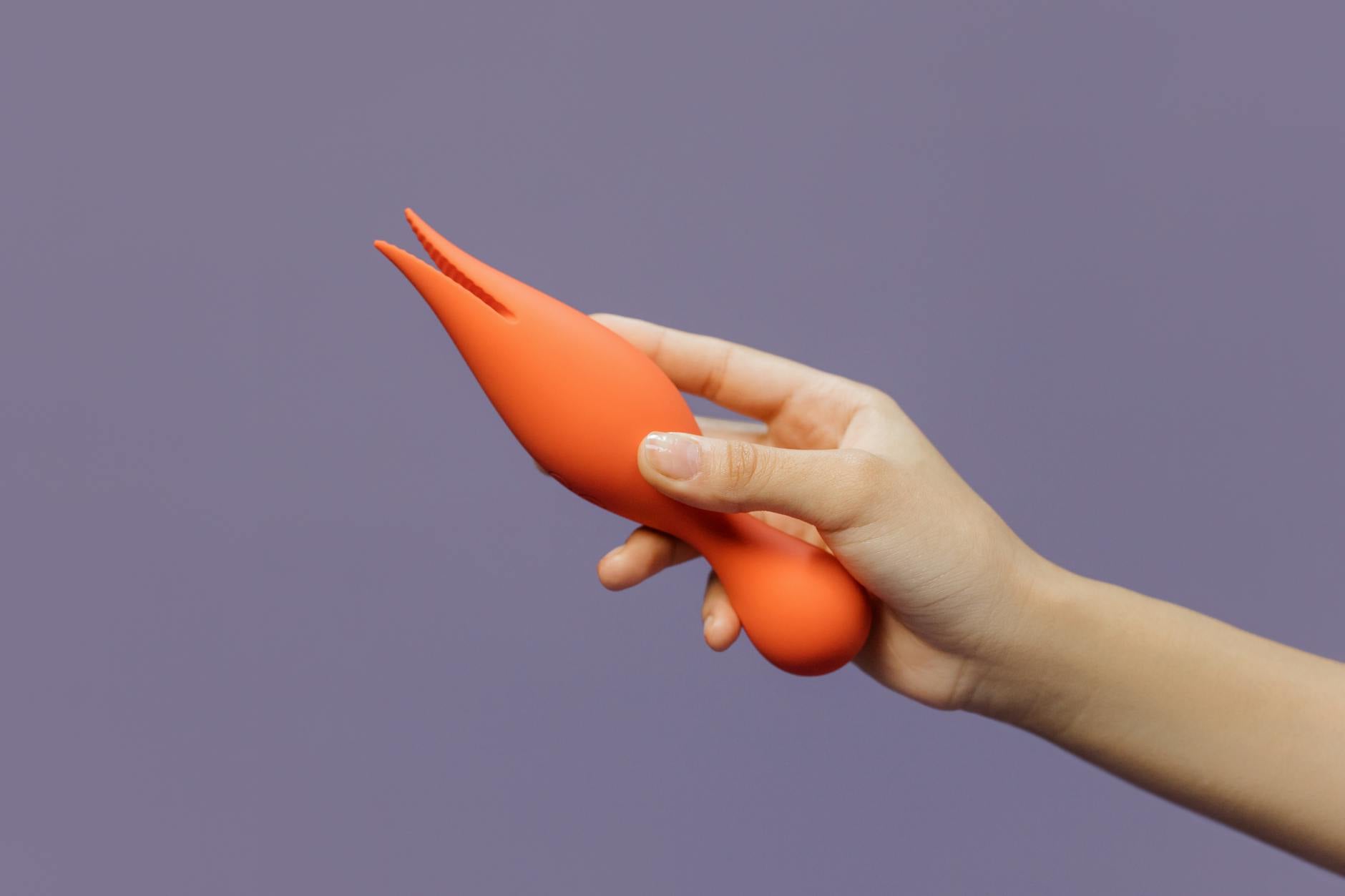
Here's what changes, what you can actually do about it, and why a clitoral vibrator like a lemon vibrator becomes such a useful tool during this adjustment period.
Why antidepressants affect pleasure
SSRIs (selective serotonin reuptake inhibitors) and SNRIs increase serotonin availability in your brain. That's brilliant for mood. But serotonin also affects dopamine pathways, and dopamine is a major player in sexual arousal and reward sensation.
The mechanical side matters too. These medications can delay or blunt the orgasmic response. Your body might need more stimulation to reach the same point. Lubrication might shift. Arousal might take longer to build. None of this is permanent. Most people find their sexual response stabilizes after a few weeks or months on the medication.
The emotional side is real as well. When you start on an antidepressant, you might feel genuinely less interested in sex. This isn't laziness or depression sneaking back in. It's the medication itself. And it usually passes.
The clitoral vibrator approach during the adjustment period
This is where devices from Hellanancy's Lemons become genuinely practical, not just nice-to-have. When your natural arousal pathway is muted, external, consistent stimulation bypasses some of that neurochemical friction.
A lemon clitoral vibrator like the Lem works specifically because:
It provides sustained, precise stimulation that doesn't rely on your body's natural lubrication or arousal escalation. You don't have to "feel like it" to benefit. Your nervous system responds to the stimulation regardless of whether desire showed up first.
The suction pattern activates nerve endings in a way that builds sensation gradually, which often feels more achievable than traditional vibration when your baseline arousal is already dampened.
It removes the pressure to perform or reach orgasm through standard penetration or partnered touch, which can feel overwhelming when you're fighting medication side effects on top of everything else.
Starting from scratch with a lemon vibrator while on antidepressants
If you're new to clitoral vibrators or returning to pleasure after antidepressants muted it, this progression works:
Week one: exploration without expectation. Use your lemon vibrator on the lowest setting for 5 to 10 minutes, ideally when you're alone and not trying to achieve anything. The goal is sensation, not orgasm. Pay attention to what feels neutral, what feels good, what feels too much. This is pure information gathering.
Week two: extend the session. Increase to 10 to 15 minutes. You might notice your body responding faster as it remembers what pleasure feels like. Some people find that the repeated gentle stimulation actually helps reset their arousal baseline.
Week three and beyond: adjust intensity. Many people find they can move from pattern 1 to pattern 2 or 3 on a lemon vibrator as their sensitivity returns. Others stay on lower settings indefinitely. There's no "should" here.
The key is that this is a conversation between you and your body, not you and an expectation. The vibrator is just the translator.
Working with a partner during this adjustment
If you have a partner, they need to understand that your response isn't about them. When arousal is flattened by medication, it's easy to slide into feeling broken or undesirable. Your partner might feel rejected or confused.
The clearest move is to separate pleasure from penetration for a while. Use your lemon vibrator on your own, or with your partner present but not performing. Let them watch, or let them be in the room reading. The goal is to rebuild your own sensation first, before layering in the complexity of pleasing someone else.
Many couples find that once the person on antidepressants rediscovers their own arousal independently, partnered sex becomes easier because there's no pressure for it to be mutual and synchronized. You've already proven to yourself that pleasure is still there.
When to talk to your prescriber
If the sexual side effects don't ease after 4 to 6 weeks, raise it. Your doctor has options: switching to a different SSRI or SNRI (some have lower sexual side effects than others), adding an additional medication to counteract the effect, adjusting timing, or lowering the dose.
Don't just live with it. Sexual function is part of quality of life, and treating it as negotiable is actually standard care.
Also worth knowing: some people find that taking their medication at a different time of day (right after orgasm, for example, rather than before) helps. This is worth discussing with your prescriber too.
The patience part
Your nervous system is adjusting. Your brain chemistry is shifting. Your medication is probably also helping with something really important. Pleasure will return. It might look different than it did before, and that's okay.
Many people who stick with this adjustment period find that their sexual response eventually stabilizes at a new baseline that includes both the medication's benefit and a return to satisfaction. A lemon clitoral vibrator bridges that gap. It's not a band-aid. It's a tool that works with your body during the transition.
If you want to understand your sensitivity better, how to choose the best lemon vibrator setting for your sensitivity level walks through the different patterns and which ones tend to feel gentler during periods of reduced arousal.
For people rebuilding pleasure after other body changes, how to use a lemon vibrator when you produce less lubrication naturally covers similar ground from a different angle.
People also ask
Can I use a clitoral vibrator while on SSRIs?
Completely yes. In fact, many people find that using a vibrator while on SSRIs helps rebuild arousal that the medication has dampened. There's no interaction between the medication and the device itself. The vibrator is just an external tool that stimulates your nerve endings. If anything, the consistent, precise stimulation can help your nervous system remember what pleasure feels like during a period when your brain chemistry is working against natural arousal.
How long does it take to regain sexual interest on antidepressants?
It varies widely. Some people notice their arousal returning within 2 to 3 weeks. Others take 8 to 12 weeks. For some, the initial adjustment period feels manageable and then sexual response gradually returns to baseline. For others, it takes longer. If it hasn't improved after 8 weeks, talking to your prescriber about switching medications or adjusting your dose is genuinely worth doing.
Will the sexual side effects of antidepressants go away on their own?
Many people do see their sexual response normalize over time as their body adjusts to the medication. But "eventually" doesn't help right now. If the side effects are affecting your quality of life, you don't have to just wait and hope. Your doctor can help you explore options.
Can a lemon vibrator replace the need to talk to my doctor about antidepressant side effects?
No. A vibrator is a helpful tool for exploring pleasure during an adjustment period, but it's not a solution for medication side effects. If your sexual function is significantly affected, your prescriber needs to know. They can help you figure out whether the side effect will pass on its own or whether adjusting your medication makes sense.
Is it normal to feel guilty about using a vibrator while on antidepressants?
Yes, and it's worth questioning. Many people internalize the idea that they "should" be able to experience pleasure without assistance. Antidepressants are rebalancing your brain chemistry. Using a tool like a lemon vibrator during that adjustment is practical, not a failure. It's you taking care of yourself.
What if I can't orgasm even with a lemon vibrator?
That's still within normal range for someone on antidepressants. Orgasm isn't the only form of pleasure. Some people find that focusing on sensation and arousal without the goal of climax actually helps their nervous system relax and eventually makes orgasm more accessible. If you want to work with deeper, less intense stimulation, how to use a lemon vibrator when you want deeper orgasms with less stimulation explores that approach.
The bottom line
Starting antidepressants is often the right call for your mental health. The sexual side effects are real, but they're not permanent and they're not something you have to white-knuckle through alone. A lemon vibrator becomes a practical bridge during the adjustment period, helping you rebuild sensation and arousal while your brain chemistry settles. Talk to your doctor, be patient with your body, and know that pleasure is still available to you on the other side of this transition.