Here's the thing about introducing toys to a partner who's toy-shy
Most of the anxiety isn't about the toy itself. It's about what you're implicitly saying when you bring one into the bedroom. Does it mean they're not enough? Does it mean you've been faking it? Is this a referendum on your sex life? None of those things are true, but if your partner hasn't used toys before, their brain might go there anyway.
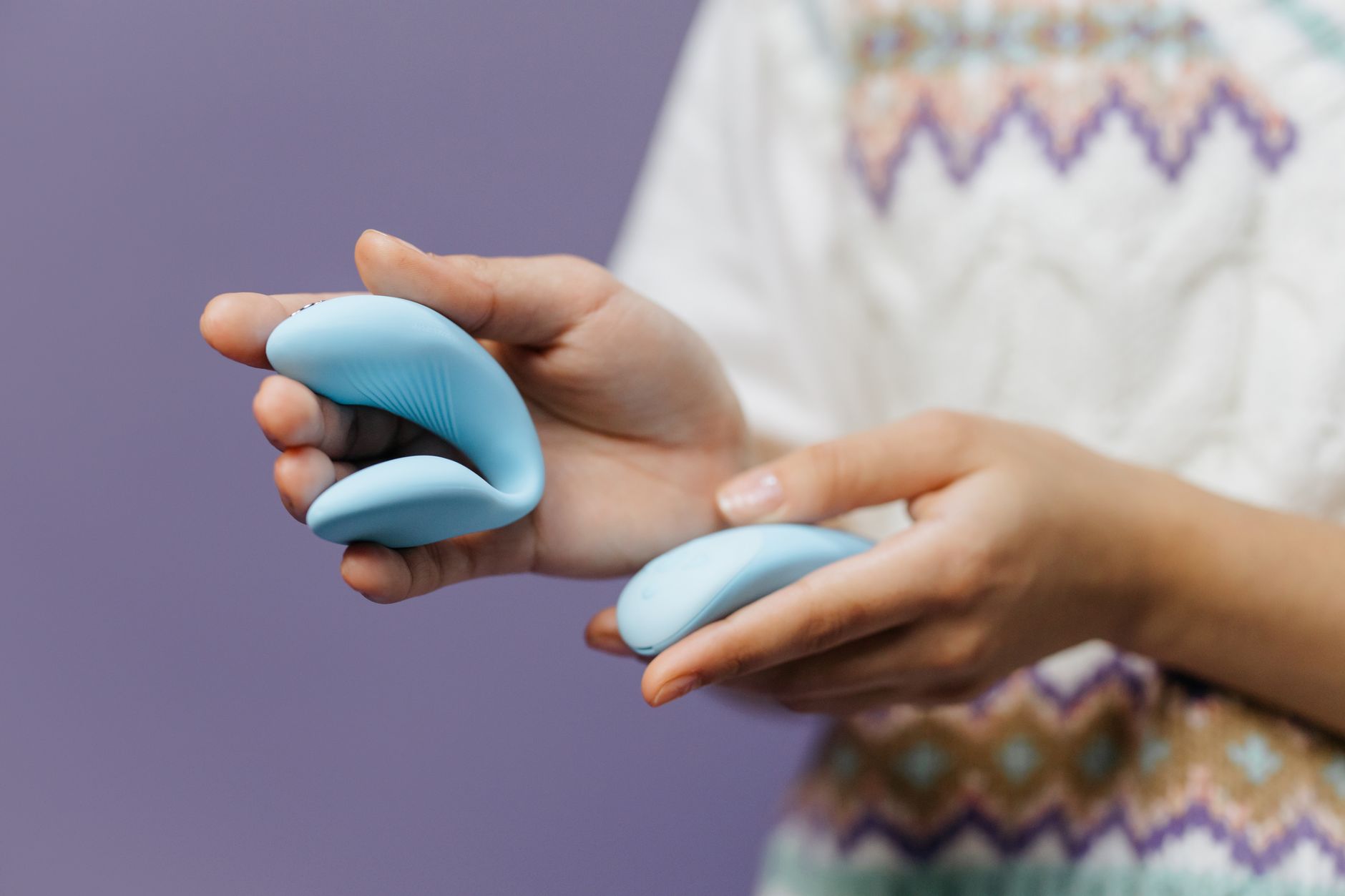
The Lemon vibrator is designed specifically for this moment. It's intuitive, unintimidating, and honestly pretty beautiful on a nightstand. But the device alone won't smooth the conversation. That's on you and your partner.
Why the conversation matters more than the toy
I work with couples all the time where one person brings home a vibrator with zero preamble. It never lands well. Not because the toy is bad, but because it feels like a surprise audit of the relationship. Suddenly your partner is on the defensive, trying to decode what this means about their performance, their worth, your satisfaction.
You're not buying a toy. You're buying an invitation. And invitations require context.
Here's what I recommend: Have the actual conversation before you buy anything. Not in the moment when you're undressing. Not mid-sex. Sit down when you're clothed and alert.
How to start the conversation without it feeling clinical
Forget the word "toys." Seriously. It sounds clinical and weird in a way that "vibrator" doesn't. Just say it plainly.
Try this: "I've been thinking about trying a clitoral vibrator together, something like the Lem. Not instead of you. With you." That distinction matters. You're not replacing them. You're adding something.
Then pause. Let them respond. Don't fill the silence with explanations unless they ask. Many partners just need a second to recalibrate.
If they ask why, be honest: "My body responds differently sometimes, and I want to explore that without stress. I think it could be fun for us to play with together." No apology. No self-deprecation. Just the truth.
If they get defensive, that's real information. It might mean they need reassurance about their role, or it might mean they need time. Both are valid. But at least you know what you're actually dealing with.
The setup matters more than you think
If your partner has agreed to try a clitoral vibrator, don't just whip it out during sex. That's startling and weird. Instead, introduce it in a low-stakes way first.
Try this: on a non-sex day, show them the toy. Let them hold it. Press the button if they want. It sounds silly, but familiarity kills a lot of the weirdness. They're touching it with curiosity, not anxiety. That's a different energy.
Then, when you do use it together, set up for success. Good light (not pitch dark, but not interrogation-bright). Comfortable position. Plenty of lubricant. The lemon vibrator works beautifully with water-based lube, and having that on hand tells your partner you've thought this through.
These small details say: I'm not making this up as we go. I've considered you.
The first time: what actually happens
When you introduce it during sex, start slow. Have your partner apply it, or guide their hand while they hold it. This keeps them engaged and in control, not like they're watching a show.
Let them feel your response. Honest reactions matter here. If it feels good, don't hide it. Moan, move, tell them what's working. Your pleasure is the entire point, and when they see you enjoying themselves, the weirdness often evaporates.
Keep talking throughout. "That's nice." "A little slower." "Right there." It's less vulnerable-sounding than silence, and it keeps them from spiraling into their own head about whether they're doing it right.
Plan for it to be imperfect the first time. Maybe the angle is off. Maybe they hold it too tight or too loose. Maybe you both giggle awkwardly. That's fine. You're learning together.
The goal isn't an orgasm. The goal is to normalize the toy in your shared space so that next time, it doesn't feel like such a big deal.
What partners often worry about (and how to address it)
Most toy-shy partners are afraid of one of three things. Here's how to handle each one.
"Am I not enough?" This usually comes out later, not immediately. If your partner says this, be direct: "This has nothing to do with you. Some days my body needs something different. That's not about your performance. It's biology." Offer a recent example if you have one. "When I'm stressed, my body takes longer to respond. That's not your fault. This helps me get out of my head."
"Is this weird?" No. Lots of couples use vibrators. The Lemon vibrator was literally designed for partnered play. You can mention this if it helps, but mostly reassure them that you're not doing anything strange or extreme.
"What if I can't make you come without it?" This is the big one. Some partners internalize it as failure. The honest answer is: your partner's hands might not hit the exact spot or intensity your body needs to orgasm. That's not a character flaw. That's anatomy. A vibrator is a tool, not a judgment.
Building the habit (so it doesn't feel like a special occasion)
Once you've done it once or twice successfully, the goal is to make it unremarkable. Use the lemon clitoral vibrator sometimes. Don't use it other times. Let it be a choice, not a compulsion.
If every time you have sex you reach for the vibrator, your partner might start to feel like they're unnecessary. But if you use it sometimes, alongside hands and mouth and friction, it just becomes part of your normal palette.
This is where a lot of couples succeed: the toy becomes a neutral instrument, not a statement.
When to call in extra help
If your partner remains resistant after an honest conversation and a gentle introduction, that might signal something bigger. Maybe they have trauma around sex or control. Maybe they're struggling with their own body image or performance anxiety.
That's not something a vibrator fixes. That's something to address with a therapist or a sex counselor together. Some friction is normal. Outright refusal to engage, or repeated comments about inadequacy, suggests you both need support processing what's underneath.
The deeper reason this matters
Introducing a clitoral vibrator to a toy-shy partner isn't really about the vibrator. It's about building a culture in your relationship where pleasure is something you explore together, without shame or defensiveness.
When your partner can hand you a lemon vibrator without weirdness, it means they've internalized that your pleasure matters. That their pleasure matters. That you're building something together that's bigger than any one person's performance.
That foundation makes everything else easier.
Common questions about using a lemon vibrator with a partner
How do I know if my partner is actually ready for a vibrator, or just saying yes to appease me?
Watch for genuine curiosity versus compliance. A partner who's ready will ask questions, might want to see it, will engage in the conversation. A partner who's just appeasing you will say "sure" and then go quiet. If you're not sure, ask directly: "Are you actually open to this, or are you saying yes to make me happy?" Honest partners appreciate the permission to be honest back.
What if my partner wants to use the vibrator on me, but I'm nervous about losing control?
That's super normal. Start by keeping your hands involved. Guide their hand while they hold the vibrator. Tell them exactly what feels good. You're not losing control. You're sharing it. There's a big difference.
Can a lemon vibrator actually enhance our sex life, or is it just a novelty?
It depends what you do with it. If you treat it as a novelty and never bring it up again, it stays a novelty. If you integrate it into your regular rotation and stay open to exploring together, it can genuinely shift what's possible for both of you. The vibrator is a tool. Your willingness to grow together is what actually changes things.
My partner likes the idea of a vibrator, but is worried about noise. How quiet is a lemon vibrator?
The Lem is relatively quiet compared to wand vibrators, but it's not silent. If noise is a genuine concern for your living situation, you can incorporate it strategically. Use it during times when there's background noise. Communicate about it with your partner so it doesn't feel like a secret. And honestly, some couples find the low buzz kind of sexy once they get past the initial self-consciousness.
Is it okay if my partner doesn't want to use the vibrator on me, but wants me to use it solo while they watch?
Completely okay. Everyone's comfort zone is different. Some partners love the active role of using it on you. Others prefer to witness your pleasure. Both are valid. As long as you're both enjoying it and feeling connected, the exact choreography doesn't matter.
How often should we use a vibrator? Are we doing it wrong if we need it every time?
There's no "right" frequency. Some couples use it most times they have sex. Some use it occasionally. The only real indicator that something's off is if one person feels dependent on it, or if you're using it to avoid other kinds of connection. If you're both happy and feeling close, you're not doing it wrong.
What comes next
Once you and your partner have successfully used a clitoral vibrator together, you've opened a door. You've said to each other: we can talk about pleasure. We can try new things. We can be curious together without shame.
That changes everything. Not just sexually, but in how you communicate about other vulnerable stuff too. Once you've navigated a conversation about vibrators as a team, you're both a little braver about everything else.
If you're looking for other ways to rebuild connection with your partner, or if you want to explore how a lemon vibrator can work during different phases of your relationship, we've got guides for that too.
Start with the conversation. The rest follows naturally.