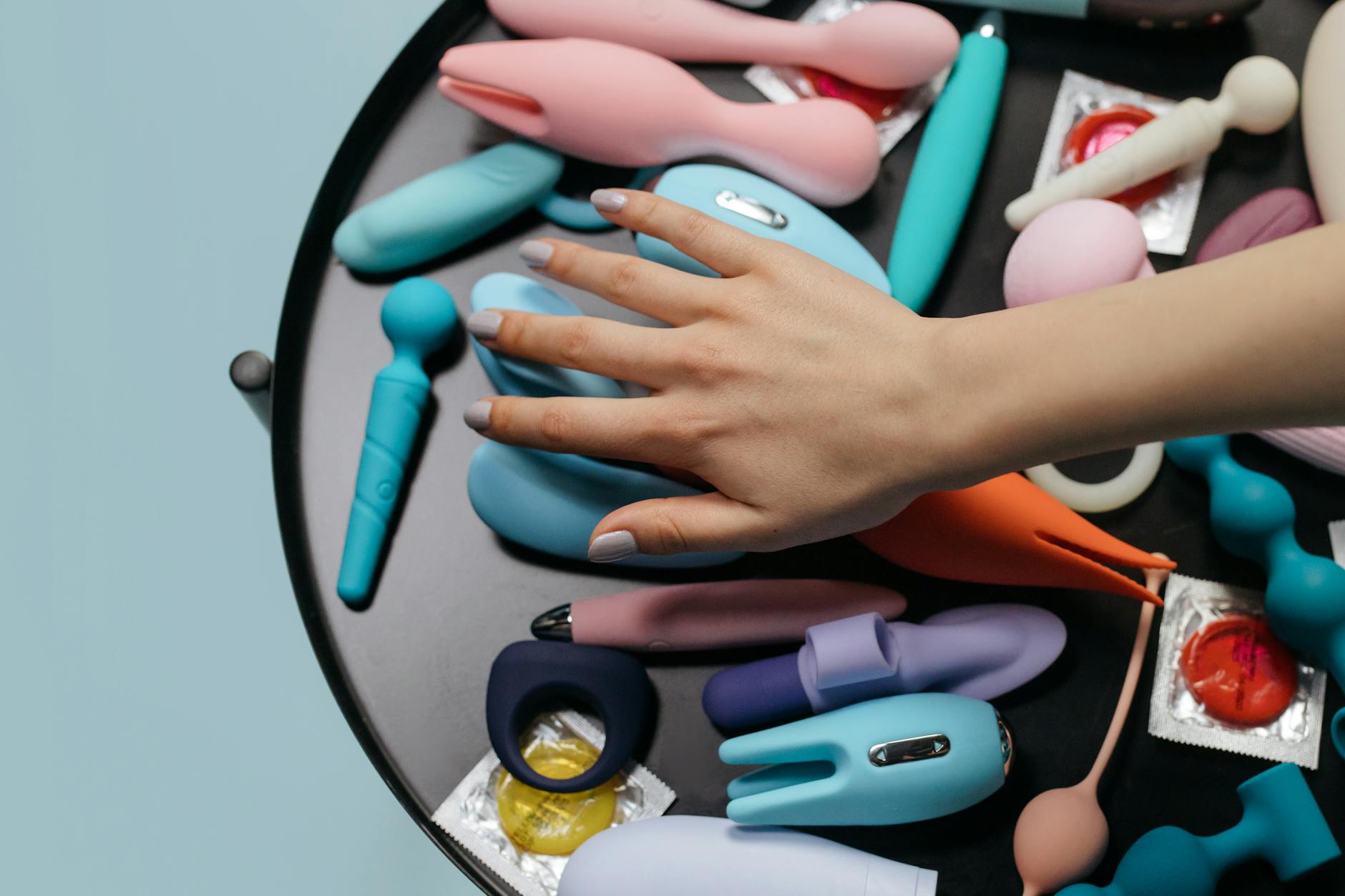
Let's be honest about solo pleasure
Solo pleasure is not the warm-up act. It's not what you do when a partner isn't available. It's the main event. And for a lot of people, it's the only time they actually learn what they want.
When I work with couples in therapy, the ones who have a strong sense of their own pleasure patterns—what works, what doesn't, what builds slowly versus what needs a hard stop—those are the people who build the most connected intimate lives together. Self-knowledge translates to better communication, fewer guesses, and actual satisfaction.
If you're exploring solo pleasure for the first time, or returning to it after years with a partner, a lemon clitoral vibrator changes the game because it's direct, adjustable, and genuinely pleasurable without requiring you to perform or explain anything to anyone.
Why solo exploration matters more than you think
Here's what the research actually shows: people who have regular solo pleasure have better partner sex, clearer boundaries, and lower anxiety around intimacy overall. Your nervous system learns that pleasure is safe, that your body responds reliably, and that you can trust your own signals. Those are foundational skills.
When you explore alone, there's zero pressure to climax on someone else's timeline. No performance anxiety. No adjusting your body for someone else's comfort. No checking in or worrying if you're taking too long. You get to discover the actual texture of your own desire without filtering it through anyone else's presence.
For some people, that's transformative. For others, it's the first time they've had permission to prioritize their own sensations without guilt or obligation.
Getting started with a lemon vibrator solo
The first thing is environment. You need a space where you're genuinely alone and won't be interrupted. That means a closed door, phone on silent, no mental checklist of tasks. Twenty minutes of actual solitude, not stolen time between errands.
Second, set realistic expectations about what will happen. Some people orgasm on the first try with the right tool. Others take weeks of exploration before anything clicks. Both are completely normal. The goal isn't to hit some milestone. The goal is to learn how your body responds to sustained stimulation without judgment.
Third, use lubrication. Even if you don't think you need it, water-based lube changes the entire experience. It reduces friction, lets you explore different pressures without rawness, and honestly makes the sensations richer. Start with a quarter-sized amount.
The actual technique with a lemon vibrator
The Lem and other lemon clitoral vibrators work through gentle suction and pulsing, not intense buzzing. That matters because your clitoris has about 8,000 nerve endings, and overstimulation shuts them down. Suction wakes them up instead.
Here's the sequence: Start with pattern 1 or 2 on low. Don't use the highest intensity right away. Place the opening directly over your clitoris, creating a light seal. You shouldn't feel like you're gripping yourself. It's more like a gentle cup.
Take your time. Arousal takes longer when there's no other person's energy in the room. Build it for 10, 15, sometimes 20 minutes. Let your body warm up slowly. The longer the buildup, the more intense the sensations usually become.
Try different patterns. Most people find they prefer 2 or 3 over the hyper-intense ones. Experiment with the angle. Some people discover that tilting the device slightly changes everything. This is your laboratory. There's no wrong way to do this.
If nothing happens after 30 minutes, stop. You haven't failed. Your body just needed more time, or different context, or a different day. Try again tomorrow. Pleasure isn't like productivity. You can't force it.
Managing expectations around orgasm
Here's what I tell people in my office: if an orgasm happens, great. If it doesn't, the exploration itself is the win.
Some people experience multiple orgasms when they finally find the right rhythm. Others have one strong one. Some people find that the pleasure builds continuously without a distinct peak, and that feels amazing too. There's no hierarchy. Your experience is valid.
There's also a real phenomenon where the first few times feel like a lot of effort for not much payoff, and then suddenly, something shifts and the sensations intensify wildly. Neurologically, your brain is learning to process the input and your pelvic floor is learning to respond. Patience matters.
If you have a history of difficult partner sex or trauma, solo exploration might feel complicated emotionally. You deserve support. Consider talking to a therapist who specializes in sexuality before diving in. They can help you separate old patterns from new discovery.
Why a clitoral vibrator like the Lem matters for solo play
The beauty of a lemon vibrator is precision without fatigue. Your hand can't do what a device can do for 20 minutes without cramping. A toy gives you stability, different pressure options, and the ability to let your mind wander while your body stays stimulated.
For solo exploration, that's perfect. You're not managing anyone else's experience. You don't need to look a certain way or perform confidence. You can close your eyes, focus on sensation, and let your body teach you what it likes.
The suction mechanism in particular tends to feel different from direct vibration. It's less likely to cause numbness with extended use, and many people report more intense orgasms once they find their preferred pattern.
Building a routine that works for you
Consistency helps. If you explore at the same time each week, your nervous system starts to expect it and actually responds more readily. Some people prefer morning when their body feels energized. Others find late evening quieter and more relaxed.
You don't need elaborate ritual. You do need privacy, a few minutes of transition time to shift out of "doing" mode into "feeling" mode, and permission to prioritize this as valuable. Because it is.
Keep your vibrator clean and charged. Store it somewhere you feel comfortable accessing it. If you live with others, a closed drawer or a small lock box works. You deserve privacy around your own pleasure.
If you've been with the same partner for years and are returning to solo exploration, don't be surprised if it feels emotionally significant. You're reclaiming a part of yourself that might have taken a back seat. That's not cheating or unfaithful. That's self-respect.
Pleasure without apology
Your solo pleasure doesn't owe anyone anything. It doesn't have to lead to partner sex. It doesn't have to happen on someone else's schedule. It exists for you, by you, about you. And that's exactly why it matters so much.
When you know your body well enough to be the expert, you stop seeking permission. You stop shrinking your desires to fit someone else's comfort. You learn to ask for what actually works instead of hoping they guess.
That changes everything. Start with 20 minutes alone, a lemon vibrator, and pure curiosity. Your body will take it from there.
People also ask
How long does it usually take to reach orgasm with a lemon clitoral vibrator?
It varies wildly. Some people orgasm within 5-10 minutes their first time. Others take 20-30 minutes of exploration before anything happens. A small percentage find that their first week with a vibrator produces nothing, and then week two changes everything. The important part is that you're not racing. Pleasure isn't efficient. Build your time expectation to 30-40 minutes and let yourself be surprised if it's faster.
Is it okay to use a lemon vibrator every day?
Yes. There's no limit to how often you can explore solo pleasure. Some people do it several times a week, others daily, some once a month. There's no "too much." Your body will tell you if it needs a break. Listen to that signal. If you notice numbness or irritation, give yourself a few days rest and use more lube when you return.
Can using a vibrator during solo play affect my ability to orgasm with a partner?
This is the worry people rarely voice out loud. The short answer: no. If anything, knowing your own patterns makes partner sex better because you have information to share. Some people do notice that their body responds differently in a partnered context, which is totally normal. The nervous system reacts to another person's presence. That doesn't mean solo pleasure broke anything.
What if I can't orgasm with a lemon vibrator but I can with my hands?
Then your hands are what you need right now. Different tools work for different bodies. A vibrator is not the gold standard. It's just an option. If you're curious about exploring one, keep trying. If you feel pressured, stop. Your solo pleasure should feel good, not obligatory.
Should I tell my partner I'm exploring solo pleasure?
That's your call. Some couples find that transparency strengthens things. Others find that some privacy makes both people feel more relaxed. There's no moral obligation to report your solo activities to anyone. If you choose to share, frame it as information, not confession. "I've been exploring what I like" is very different from "I have to tell you something."
Can I use my lemon vibrator both solo and with a partner?
Absolutely. Many people use the same device solo and in partnered play. Just keep it clean between uses. Some couples find that solo exploration makes partnered exploration way less awkward because everyone already knows the tool works. Others prefer to keep them separate. Do what feels right for your relationship.
The point
Solo pleasure is not the opening scene. It's the foundation. You are allowed to know your own body well enough to direct your own pleasure without apology or explanation. A lemon vibrator can help you get there faster, but the real work is permission. Give yourself that, and everything changes.