Let's start with the honest part
Sex doesn't disappear just because your body took a hit. But something shifts after illness, injury, or recovery. Your nervous system learns caution. Your mind gets protective. Desire doesn't vanish. It just feels further away, like you're reaching for something on a shelf that's a little too high.
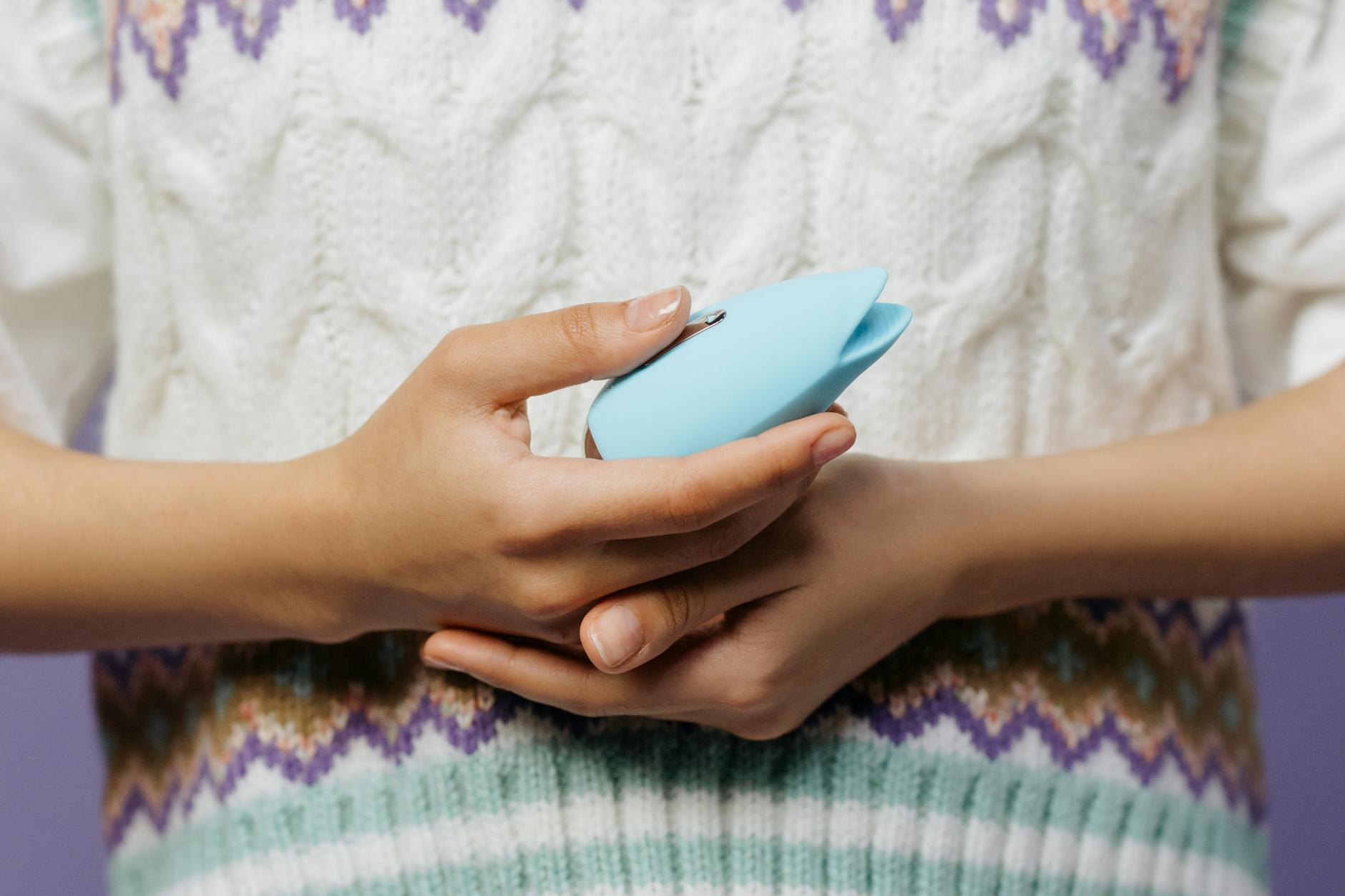
The good news: a lemon vibrator, with its gentle suction design, is exactly the tool for relearning pleasure when your body's been compromised. Not because it's magic. Because it meets you where you actually are.
What changes after health setbacks (and why it matters)
Here's what I see clinically. After surgery, illness, or long recovery, three things happen simultaneously:
Your body has actual physiological changes. Medication, inflammation, scar tissue, or nerve sensitivity can all rewire how sensation works down there. A drug that helped you survive might've flattened your libido as a side effect. That's not weakness. That's biology.
Your nervous system goes into protective mode. Your sympathetic nervous system (the fight-or-flight branch) was probably activated during whatever happened to you. It takes time for the parasympathetic nervous system (the "rest and digest" branch) to feel safe enough to reengage with pleasure.
Your mind creates a story. Often it's something like: "My body let me down once. Will it do it again?" Or: "I don't deserve pleasure right now." Or: "Sex is too much; I need to heal first." That story becomes real because your brain doesn't know the difference between an actual threat and a story you're telling yourself about a threat.
The thing is, pleasure itself is often part of healing. Not immediately. Not if you're still in acute pain. But when you're past that, when you're in the "getting better" phase, reconnecting to sensation can actually speed recovery. It increases blood flow. It releases endorphins. It reminds your nervous system that your body can feel good again.
Why a lemon vibrator works for this specific transition
A clitoral vibrator like the Lem uses air-suction technology rather than traditional vibration. That distinction matters when you're coming back from a setback.
Here's why. If your clitoris is sensitive, overstimulated, or still recovering from procedure-related irritation, direct vibration can feel too aggressive. Suction is different. It's gentler, but it's not weak. It's actually more efficient at creating deep sensation without the jackhammer effect.
You control the intensity by picking your pattern. Start at pattern one. Genuinely. Your instinct might be to dive back in at medium strength. That's how people end up frustrated and discouraged. Pattern one is the right entry point after health changes. You're not proving something. You're listening.
The other thing: using a lemon vibrator is a conversation you're having with yourself, not a performance you're staging. That matters psychologically. Solo pleasure becomes a way of checking in: What does my body feel like today? What does it want? That's radically different from sex being something you "do" or "should" be able to do.
Building the foundation: three weeks of gentle reconnection
I'm not being poetic. There's actually research on nervous system reset after trauma or illness. It usually takes about three weeks of consistent, low-pressure exposure for your system to start trusting again.
Week one: just touch. No vibrator. Spend 10 minutes a night in a space where you feel safe, with lotion or a water-based lube, and lightly explore your vulva with your fingers. You're not aiming for anything. No orgasm goal. You're gathering data. Does this feel numb? Hypersensitive? Tight? Warm? Neutral? Your job is observation, not judgment.
Week two: introduce the Lem on pattern one, no lubricant. Hold it lightly over your clitoris. Literally just hover it. The suction does the work. You're learning how your body responds to this specific type of stimulation. Again, no outcome goal. You might feel little to nothing. That's not failure. That's information.
Week three: add water-based lubricant and try patterns one and two for 5-10 minutes. If pleasure starts building, that's great. If it doesn't, that's also fine. You're building neural pathways, not chasing orgasms.
After three weeks, your nervous system usually starts saying "okay, this is safe." Then you can gradually increase intensity and duration.
Managing the mental game
Your body has probably been through something that required you to be very aware of it in a clinical way. Doctors, nurses, maybe catheters, maybe pain. Your relationship to your body shifted into "body as machine that needs fixing" mode.
Shifting back to "body as source of pleasure" is not automatic. Your brain might feel guilty. Pleasure feels frivolous when you've just survived something serious. That's understandable. But pleasure isn't frivolous. It's part of being alive.
Here's what actually helps: give yourself explicit permission. Not just "yeah, I know I deserve pleasure." Actually sit down and write it out. "I'm allowed to feel good in my body again. That doesn't mean I'm ungrateful for surviving. It means I'm honoring the fact that I did survive, and now I get to live, not just recover." That sounds corny in print. Try saying it out loud to yourself anyway.
Second: separate pleasure from performance. You're not trying to prove you're "back to normal." You're not racing toward an orgasm to confirm your body still works. You're having a conversation with sensation. That's a different thing entirely.
When to pause and when to push forward gently
There's a difference between discomfort and pain. Between "this feels strange because my body's rebuilding" and "this is telling me something's actually wrong."
If you're experiencing sharp pain, significant numbness that doesn't shift at all over several days, or unusual discharge or swelling, stop and check in with your doctor. That's not quitting. That's listening.
If you're experiencing mild discomfort, unusual sensation, or even emotional resistance, that's often normal. Your body's been through something. Rebuilding takes time. Gentle pushes forward (like moving from pattern one to pattern two) are okay. Forcing it is not.
The lemon vibrator's design actually helps here because you have such granular control. You're not choosing between "off" and "full speed." You can adjust the intensity and see what your body's telling you in real time.
When pleasure starts coming back
Sometimes it's sudden. One day you're on pattern two of the Lem and your breath changes and you think "oh. There it is." Sometimes it's gradual. You notice over a week that you're thinking about pleasure more, initiating solo time more often, and the sessions feel less like "checking the box" and more like actually wanting it.
Both patterns are normal. Neither means you're "better" or "healed." It means your nervous system is starting to trust again.
This is also when you might discover that your pleasure looks different than it did before. Maybe you need longer warm-up time. Maybe patterns three and four feel perfect where you used to prefer higher speeds. Maybe orgasms feel different now. That's not worse. That's just different. And different isn't failure.
If you have a partner, this is worth telling them. "My body's different now and I'm learning what works." That conversation, honestly, deepens intimacy more than anything else you could say. It says: "I'm trusting you with my vulnerability, including the sexual part."
The difference between solo reconnection and partner sex
Here's something that trips people up. You feel great using the Lem solo. Then you try partnered sex and it doesn't feel the same, and you panic. That's actually completely normal and doesn't mean anything's wrong.
Solo pleasure is a different nervous system state than partnered sex. When you're alone with your lemon vibrator, your only job is to listen to your body and respond. There's no pressure. No performance anxiety. No coordinating with someone else's arousal or timing.
Partnered sex adds all those variables back in. Your body might need even more time before partnered intimacy feels accessible. That's fine. Keep the solo practice going. Let partner sex emerge when both of you feel ready, and let it look however it looks, even if that's cuddling and using the Lem together while your partner watches, or your partner using their hands while you handle the vibrator yourself.
There's no timeline. Your healing, your pleasure, and your relationship all get to move at the speed they're actually moving at.
FAQ
How long before I should expect orgasms again after a major health setback?
It varies wildly depending on what you went through. Surgery, medication side effects, and psychological processing all have different timelines. I usually tell clients to give it 4-6 weeks of consistent, gentle exploration before you start evaluating whether something's "wrong." Your nervous system genuinely needs that long to reset. Some people are back to orgasms in two weeks. Others take several months. Both are normal. What matters is that you're moving forward, not that you're moving fast.
Is it okay to use a lemon vibrator if I'm still taking pain medication?
Yes, but be aware that many pain medications, especially opioids, can reduce sensation and sexual response. That's not because the vibrator isn't working. It's because the medication is doing its job of dampening sensation. If you're concerned, ask your doctor about the timeline for weaning off the medication, and use that as context for your expectations around pleasure. As the medication dose decreases, sensation often comes back.
What if I'm scared the vibrator will hurt or cause damage?
A lemon vibrator is genuinely one of the gentlest clitoral stimulation tools available. The suction is designed to be non-aggressive. Start on pattern one and you're basically asking your body "does this feel okay?" in the gentlest possible way. If you're worried about scar tissue or specific anatomical concerns from your health setback, mention that to your doctor and ask if vibrator use is safe. Most doctors will say yes, and might even recommend it as part of physical rehabilitation.
Can I use lube with a lemon vibrator if my body's sensitive?
Absolutely. Water-based lubricant can actually help if your tissues are thin or tender from medication side effects or recovery. It reduces friction and can make the whole experience feel more comfortable. Just make sure it's water-based (silicone lube damages silicone toys) and that you're using a brand that doesn't irritate your specific sensitivities. If you're not sure which lubes are safe for you, your doctor can recommend one.
What if orgasms feel completely different or muted now?
That happens after health changes, especially if surgery or medication was involved. Your nervous system has literally rewired some pathways. The good news: different doesn't mean bad. Some people find they prefer the way orgasms feel after recovery. They're slower to build, maybe, but deeper when they arrive. Some find they prefer a different pattern or intensity on the lemon vibrator than they did before. That's adaptation, not loss. Give yourself time to experience the new version before you decide it's worse.
Should I tell a partner I'm using a lemon vibrator during recovery?
That's your call, but I think honesty tends to deepen things. "I'm rebuilding my relationship with my body and pleasure is part of that healing" is a vulnerable, true thing to say. If you have a partner who cares about you, they'll get it. If they don't, that tells you something about the relationship worth knowing. Solo pleasure during recovery is for you first. Everything else is secondary.
You're not starting over. You're starting different.
The temptation after a health setback is to compare yourself to who you were before. "I used to be able to..." "My body used to feel like..." That comparison will make you miserable because the before-version of you no longer exists. You're a different person now, with a different body.
That's not a tragedy. It's just true. And honestly, most of the people I work with find that the rebuilding process teaches them more about their own pleasure, their own body, and what they actually want than they ever knew before. Recovery has a way of stripping away the shoulds and leaving just the actual wants.
A lemon vibrator isn't magic. But it's a really excellent tool for that particular conversation you're having with your body right now. Start gentle. Stay patient. Let sensation rebuild at its own pace. Your body's smarter than you think it is. It knows how to heal, and it knows how to feel good again.
You just have to give it permission and time.