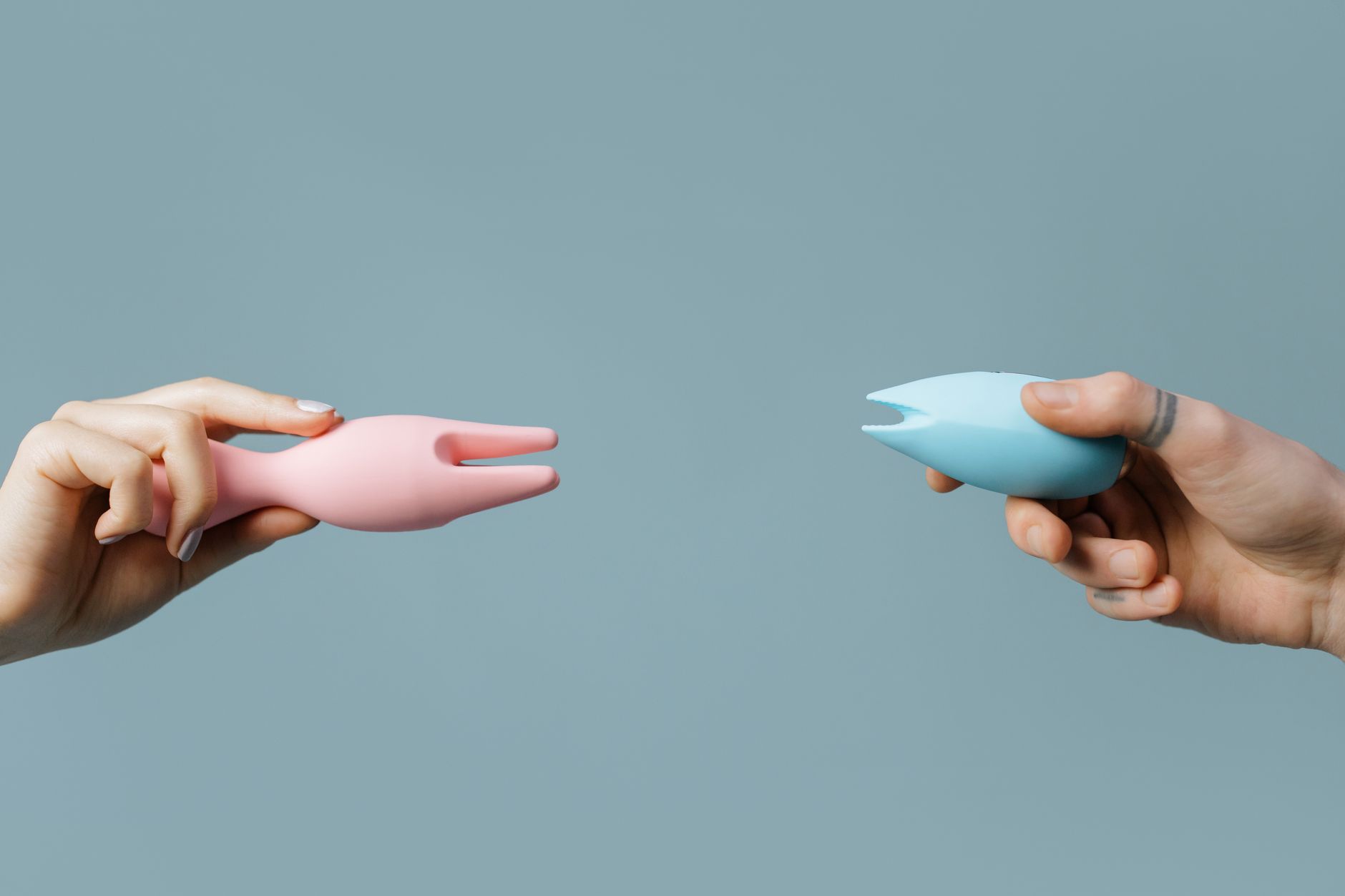
How to Use a Lemon Vibrator When You're Single and Want to Stop Faking Pleasure
Here's what nobody tells you about being single: it's the perfect time to stop faking it.
For years, maybe decades, you've been calibrating your pleasure around someone else's rhythm, expectations, or ego. You've learned to perform satisfaction on cue. You've sped up or slowed down based on what seemed polite. You've muffled sounds or amplified them depending on the vibe in the room. It becomes so automatic that you don't even realize you're doing it anymore.
Being alone changes that equation completely. There's no one to perform for. No one's pleasure is on the line but yours. This is the real gift of solo time, and honestly, it's where a lot of my clients discover what pleasure actually feels like.
Using a clitoral vibrator like the Lem alone is different from using one with a partner, and that difference matters. Let's talk about what that means and how to make it count.
The permission you didn't know you needed
Most people approach solo pleasure as something they have to squeeze in between other things. A quick release. A stress reliever. Something vaguely shameful that happens behind a locked door with the lights off.
I want to flip that frame entirely. Solo pleasure is not a consolation prize for being single. It's a conversation with your own body that you can't have any other way.
When you're alone, you can spend 45 minutes exploring one sensation without worrying you're taking too long. You can try the same pattern five times in a row if that's what feels good. You can stop and start without explaining yourself. You can take notes on what works, what doesn't, and what makes you curious. You can be messy, loud, still, intense, or quiet. You get to decide everything.
This is the space where people discover that their pleasure doesn't look like pornography. It doesn't follow a script. It's often stranger, more specific, and infinitely richer than anything they imagined.
Starting with honesty about what you've been told
If you grew up in a culture that treated female pleasure as something to manage rather than explore, your nervous system might resist this at first. Your brain might whisper that you're being selfish or weird or pathetic for spending time on this alone.
That's not a reflection of reality. That's conditioning.
One of the clearest patterns I've seen working with single clients is that the people who struggle most with solo pleasure aren't the ones lacking desire. They're the ones who've spent years learning that their pleasure doesn't matter as much as keeping the peace, maintaining the relationship, or being a certain kind of partner.
Being single gives you permission to unlearn that. Your pleasure is not selfish. Exploring what feels good isn't pathetic. This is you gathering information about yourself that will make your entire sexual life, partnered or solo, richer and more satisfying.
How to set yourself up for real discovery
There are a few practical things that change how you experience solo pleasure with a tool like a lemon clitoral vibrator.
Create a actual space for this, not a rushed moment. Find somewhere private where you won't be interrupted for at least 30 minutes. That might be your bedroom with the door locked, a bath with the phone silenced, or anywhere else that feels genuinely secure and relaxed. Your nervous system needs to believe you're safe before it will let you feel much of anything.
Start without the vibrator. Spend 5-10 minutes touching yourself the way you normally do, or the way you want to. No goal here except reconnecting with what your body responds to. This isn't foreplay. This is mapping.
Then introduce the Lem. If you're new to using a clitoral vibrator, start on the lowest pattern. Most people jump to pattern 3 or 4 because they think higher intensity equals more pleasure. Usually it just equals numbness faster. Low and slow teaches your body what the sensation actually feels like before you crank it up.
Pay attention to what you notice, not what you think you should feel. Pleasure isn't one thing. Some people orgasm easily with vibration. Some find that patterns 2-4 on the Lem feel the best but pattern 5 goes past that sweet spot into overstimulation. Some discover that they prefer the sensation on the clitoral hood rather than direct contact. Some enjoy building slowly over 20 minutes, others hit something in minutes and then need to switch it up entirely.
All of that is normal. That variation is the whole point.
Breaking the numbness trap
One thing I hear a lot from single people who've been using vibrators for years: everything feels numb now. The sensation that used to work has stopped working. They assume they've broken themselves.
What's usually happened is that they've trained their body to expect a specific intensity level, and now lighter sensations don't register. This is reversible, but it requires patience.
If this is you, take a break from the vibrator for a week or two. Use your hands instead. Let your nervous system remember what lower-intensity sensation feels like. Then, when you reintroduce the Lem, start at pattern 1 and build slowly. You're not trying to achieve orgasm every time. Some sessions are about recalibrating what feels like something.
I've also found that single people often benefit from using a lemon vibrator when your clitoris feels less responsive to direct touch by varying the contact surface. Try the Lem on the clitoral hood, the sides, the mons pubis. You might discover that variety itself is what makes pleasure feel fresh again.
What changes when you stop performing
One of the most interesting shifts happens when you remove the partner from the equation entirely. Your body gets to respond authentically, without the voice in your head narrating how you look or sound or whether you're taking too long.
You might discover that your arousal looks completely different when there's no one watching. That you actually prefer gentler sensation than you've been having. That you orgasm differently, or take longer, or need more breaks, or that your pleasure builds in waves instead of escalating in a line.
These discoveries matter. If you ever have a partner again, you'll be able to communicate what you actually want instead of what you've learned to perform. That's not just better for your pleasure. It's better for the relationship.
Solo time is also where a lot of my single clients notice what they actually enjoy versus what they think they're supposed to enjoy. Maybe penetration feels less central to pleasure than you thought. Maybe you're drawn to a particular rhythm that has nothing to do with replicating partnered sex. Maybe you discover you love vibration but hate other textures, or vice versa.
This is the data that makes you a better partner to yourself and, eventually, to anyone else.
Getting curious without the pressure
When you're single, you can also use solo time to explore things you might feel self-conscious about with a partner.
Maybe you want to explore pleasure after a long-term relationship ends without judgment. Maybe you want to try patterns you'd been too embarrassed to request. Maybe you want to spend an entire session focused on your pleasure without balancing anyone else's needs.
You get to be curious here. You get to try things that don't work and not have to explain yourself. You get to change your mind. You get to spend 10 minutes on something just to see what it's like, then move on.
This is where real sexual confidence comes from. Not from being wanted by someone else, but from knowing what you want and being willing to pursue it alone.
Making space for consistency
The last thing I'll say is this: solo pleasure works better when it's consistent, not sporadic.
I'm not talking about needing to masturbate every day. I mean that if you carve out time once or twice a week, your body learns to anticipate it. Your nervous system knows what to expect. You start to notice patterns. You build a relationship with your own pleasure instead of treating it as something that happens to you when conditions are right.
That consistency is also what allows you to notice what's shifted if sensation changes. If you're playing with your Lem twice a month, you might not realize that starting a new medication or hitting a different part of your cycle has affected your response. If you're playing with it regularly, you notice immediately.
Consistency is the foundation of real self-knowledge. And self-knowledge is what makes every other kind of pleasure, partnered or solo, more satisfying.
People also ask
Is it normal to prefer vibration alone if you've never had an orgasm with a partner?
Completely. Some people's nervous systems just respond better to vibration than to anything else. This doesn't mean you're broken or that partnered sex will be disappointing. It means you have clear information about what works for you. Knowing that makes it easier to communicate with a future partner, or to build solo pleasure that actually feels good instead of chasing something that doesn't land for your body.
How long does it usually take to feel something real with a clitoral vibrator when you've been numb from previous vibrator use?
It varies. Some people feel the shift in two weeks. Others take a month or two. The key is actually taking a break from vibration during that time, not just using a lower pattern. Your nervous system needs to remember what subtle sensation feels like. Once it does, your sensitivity usually comes back fairly quickly. When you reintroduce the vibrator, start at pattern 1 and trust that your body remembers how to respond.
Can you use a lemon vibrator if you have a lot of anxiety about solo pleasure?
Yes, and often the vibrator actually helps. Anxiety often lives in the anticipation and the pressure to perform or feel a certain way. A vibrator can help redirect your nervous system away from that anxiety and into sensation. Start by using it in very short sessions, just five minutes. You're training your body that solo pleasure is safe and normal, not something to be nervous about.
Does solo pleasure with a vibrator feel different from solo pleasure without one?
Yes, but different doesn't mean better or worse. Vibration is a specific type of sensation that some people love and others don't respond to. What matters is knowing what works for your body. Some people benefit from varying between vibration and hands depending on the day or their cycle. Some discover they only want vibration, or they never want it. Both are completely normal.
If I'm single now but might have a partner eventually, how should I use a lemon vibrator to set myself up for that?
Focus on learning what you want, not what you think someone else might want. If you spend your solo time discovering your actual pleasure, you'll be a much clearer communicator when a partner is in the picture. You'll know which patterns feel best, how long arousal usually takes for you, what sensation you genuinely enjoy versus what you think you're supposed to enjoy. That knowledge makes partnered sex better, not worse. It gives you something to build on instead of starting from performance.
Is it okay to use a lemon vibrator every day if you're single?
There's no hard rule. If it feels good and you're not using it to avoid something or numb something, daily is fine. Just pay attention to whether your sensitivity is shifting. If you notice that the same pattern feels less intense than it used to, that's a sign to take a few days off. You're not broken if that happens. Your body just adapts. A brief break resets that.
What comes next
Solo pleasure isn't a placeholder for partnered sex or a last resort for being single. It's a complete and valid way to experience your own body and sexuality.
When you use that time to actually discover what feels good instead of rushing through a quick release, everything shifts. You stop performing. You get to be messy and specific and loud or quiet or whatever you actually are. You build the kind of self-knowledge that makes every other part of your sexual life richer.
If you're ready to go deeper into what you want and how to ask for it, reach out. That's what I'm here for.
Written by Evelyn Granieri, Marriage and Family Coach