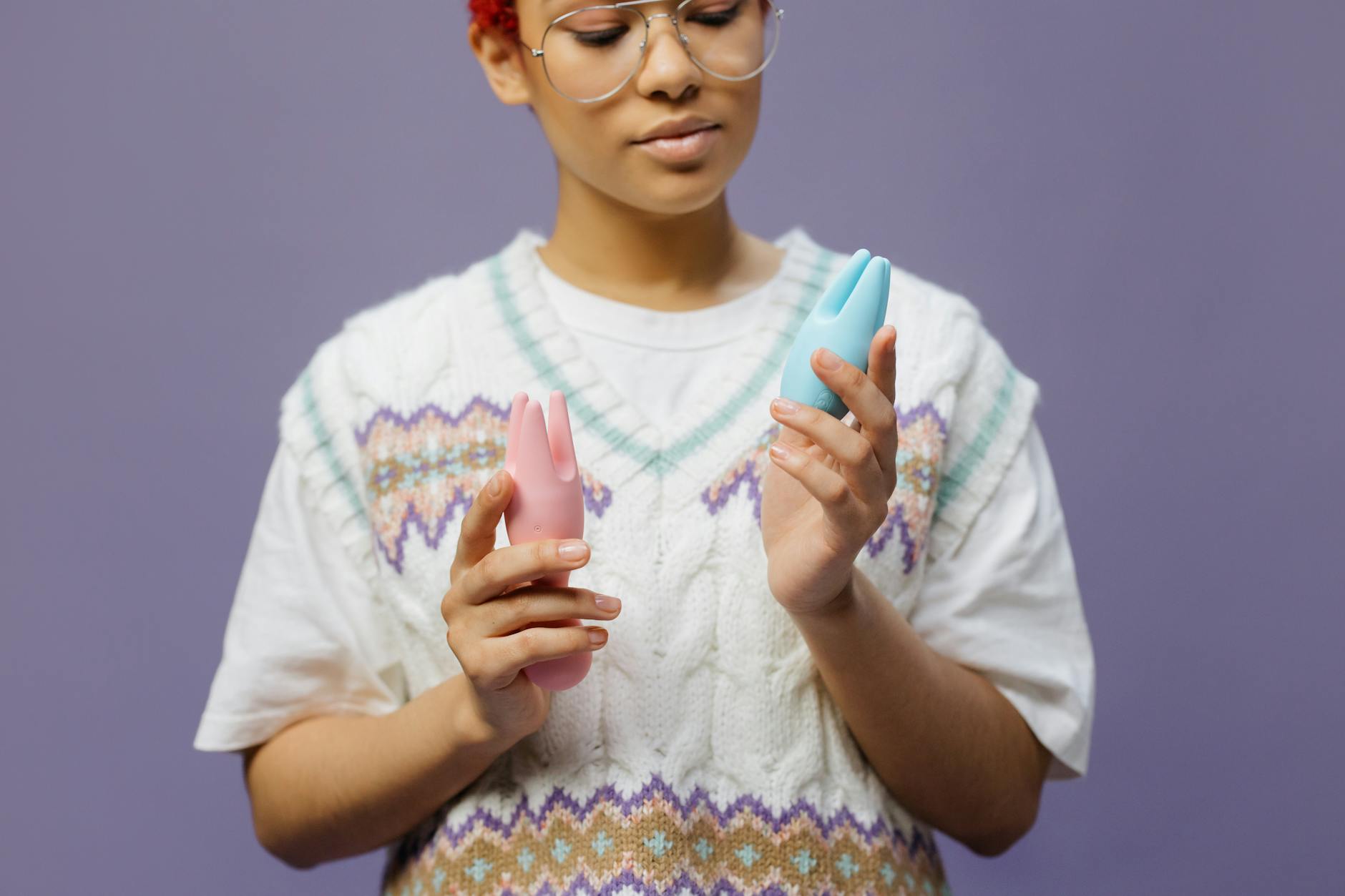
Let's talk about what hormonal birth control actually does to your pleasure
Hormonal birth control is wildly effective at preventing pregnancy. It's also quietly reshaping your sexual response without anyone really explaining how or why. If you've noticed that your arousal pattern has changed since starting the pill, the patch, the ring, or the shot, you're not imagining it. It's real. It's hormonal. And there are specific ways to work with lemon vibrators and clitoral suction that account for exactly what's happening in your body.
Here's the thing: most conversations about hormonal contraception focus on side effects like nausea or headaches. But pleasure? That conversation gets skipped, which means you're left wondering if you're broken, if your partner's lost their spark, or if you've just aged out of good sex. None of that is true.
How hormonal birth control changes sensation
Hormonal contraceptives work by suppressing ovulation. To do that, they lower and stabilize the hormones that naturally fluctuate through your cycle. The hormones we're talking about are estrogen and progestin (synthetic progesterone). These hormones don't just manage fertility. They directly affect how sensitive your clitoris is, how quickly you get aroused, and how intensely you can orgasm.
When you're on hormonal birth control, estrogen stays relatively flat instead of spiking around ovulation. Lower estrogen means several things happen simultaneously. Your vulva tissue gets slightly less plump. Blood flow to the area becomes steadier but sometimes less pronounced. Lubrication patterns change. Your brain's dopamine response to sexual stimuli can shift. The vaginal pH alters. None of this makes you broken or less worthy of pleasure. But all of it means that a clitoral vibrator that worked brilliantly before the pill might need a slight adjustment now.
The tricky part is that this shift happens gradually. Many people don't connect it to contraception because it's not dramatic. It's subtle. You might notice that you need longer warm-up time. Or that the intensity setting you loved before now feels a bit too direct. Or that your orgasms, while still very real, feel less like an explosion and more like a slow build.
Why lemon vibrators work differently on hormonal birth control
Lemon vibrators and other clitoral suction devices work by creating gentle rhythmic suction around the clitoris. Unlike traditional vibrators that rely on rapid vibration alone, the lemon's suction-based approach stimulates a wider sensory area and accesses deeper nerve endings. This matters enormously when you're on hormonal birth control.
Here's why: when estrogen is lower, your clitoris needs broader, more distributed stimulation rather than intense point pressure. A lemon clitoral vibrator's suction mechanism does exactly that. It engages the nerve-rich tissue surrounding the clitoris, not just the tip. This means you're often getting better results with lower intensity settings. Many people on hormonal birth control find that they can't use settings 7 or 8 on a traditional vibrator without discomfort, but they build brilliant sensation at levels 3-5 on a lemon vibrator. That's not a downgrade. That's actually how suction-based pleasure is designed to work.
The other advantage is consistency. Hormonal birth control flattens your hormonal peaks and valleys. You no longer have days when you're wildly sensitive and days when touching yourself feels like nothing. This steadiness is actually wonderful for learning your body with a lem vibrator, because you can dial in your perfect setting and return to it reliably, day after day, without the month-to-month guessing game.
Mapping your response across your birth control cycle
Here's where the conversation gets practical. If you're taking a 21-day active pill regimen with a 7-day break, or if you're on the ring or patch on a similar schedule, you technically still have a hormonal cycle. It's just a much gentler one.
During your active pill weeks, hormones are consistently dosed. This is when most people report the most stable arousal response. You know what to expect. During your pill-free week (if you take one), hormones drop, and some people notice a slight uptick in sensitivity. Others notice nothing. The variation is much smaller than it would be off hormonal birth control, but it can still exist.
If you're on continuous or extended-cycle birth control, you might skip that hormone-free week entirely. In that case, your hormones stay remarkably flat all month. This is actually easier for many people to navigate with a lem vibrator because there's less guessing involved.
The practical move: keep a small note in your phone for two weeks about your sensation patterns. Are you consistently at the same intensity level? Does setting 4 feel the same on day 3 of active pills and day 18? Or do you notice a shift? This is homework that takes five minutes and gives you concrete data instead of assumptions.
The warm-up shift that nobody mentions
One of the most common changes people report on hormonal birth control is that arousal takes longer to build. This isn't laziness or relationship trouble. It's a direct result of lower and more stable estrogen, combined with progestin's gentle dampening effect on some aspects of sexual response.
Your warm-up time might extend from five minutes to fifteen or twenty. That's not a problem. It's information. And once you know that, you can plan around it.
With a lem vibrator, the warm-up shift actually becomes an advantage. Start at setting 1 or 2. Spend real time there. Let your body gradually build sensation instead of jumping into intensity. The suction mechanism does a lot of the work for you, so you're not fighting against desensitization or numbness. You're cooperating with your body's actual pace.
Many people who think they've lost pleasure on hormonal birth control have actually just stopped allowing themselves enough time. They remember the old pre-pill response and judge their current response against that standard instead of against their actual current baseline. A lemon clitoral vibrator works best when you stop rushing and let the sensation accumulate.
Lubrication and comfort with birth control
Some hormonal contraceptives change cervical mucus production. The pill, in particular, can make the vaginal environment slightly drier. Not dramatically. Not always. But enough that you might notice.
This is where a water-based lubricant becomes your best friend. A lemon vibrator doesn't require friction the way a traditional vibrator sometimes does, but lubrication still makes the experience smoother and prevents any discomfort from extended suction. I always recommend a good water-based lube alongside a lem vibrator, regardless of birth control status. But on hormonal contraception, it's even more valuable.
The lube also helps you extend warm-up time without creating any sensation of rawness or friction fatigue. You can spend twenty or thirty minutes building pleasure without worry.
When to switch things up or get support
If you've been on hormonal birth control for a few months and you've genuinely lost pleasure even with all these adjustments, it might be worth checking in with your provider. Some people thrive on certain hormonal regimens and struggle on others. Switching from one pill to another, or from pills to a ring, or trying a lower-hormone formulation can make a significant difference. That's not failure. That's iteration.
Similarly, if you're experiencing pain instead of just less sensation, don't wait. That's worth a conversation with someone who knows your medical history.
Many people find that switching to a lemon clitoral vibrator after adjusting to hormonal birth control resolves most of what felt like a problem. The suction-based approach is gentler, broader, and less dependent on the kind of direct sensation you might have had before contraception. It works with your hormones instead of against them.
The permission you actually need
Hormonal birth control is an incredible tool for autonomy and life planning. It also quietly changes one of your body's most basic pleasure pathways, and almost nobody tells you that's coming. So people blame themselves, their partners, or their bodies. None of that is fair.
Your pleasure matters. Your sexual response matters. And if hormonal contraception has shifted your experience, that's not a character flaw. It's just information. A lemon vibrator and a little patience with your body's actual current pace can reshape that shift from a problem into something that works brilliantly. You deserve that attention. You deserve to come.
People also ask
Does hormonal birth control make you less interested in sex?
Hormonal contraception changes sexual response, not desire. You might feel less spontaneous arousal, which is different from having no interest. The difference matters. Lower spontaneous arousal is a genuine side effect for some people. But it's not the same as not wanting sex. Many people find that responsive arousal (arousal that builds in response to touch or partnered attention) stays strong while spontaneous arousal shifts. Using a lemon vibrator to initiate your own pleasure can actually rebuild that responsive pathway and remind your body what pleasure feels like. If you're genuinely uninterested in all sexual activity all the time, that's worth discussing with your doctor, because it could signal a need for a different contraceptive method.
Can you use a lemon clitoral vibrator on every setting with hormonal birth control?
You can, but you might not want to. Many people on hormonal birth control find that intensity settings 1 through 5 on a lemon vibrator feel perfect, while they never touch settings 7 and 8. That's not a limitation. That's actually the device working as designed. Suction-based clitoral vibrators like the lem are built to create sensation at lower intensity levels than traditional vibrators because suction distributes stimulation more widely. Starting at setting 1 or 2 and gradually increasing is the sweet spot for most people, regardless of birth control status. But on hormonal contraception specifically, you'll likely find your whole pleasure range sits lower on the intensity spectrum.
Does your sensitivity change depending on which week of pills you're on?
Possibly, but usually not dramatically. If you're on a 21-7 regimen, you might notice a tiny shift during your hormone-free week when all hormones drop further. Some people get more sensitive then. Others notice nothing. The variation is much gentler than the natural menstrual cycle. The best way to figure out your pattern is to track it for a few weeks. But many people find that hormonal birth control is actually helpful for pleasure consistency because you're not riding the massive peaks and valleys of unmedicated hormones. You get a steady baseline, which makes using a lemon vibrator easier because you know what to expect.
Is it normal to take longer to orgasm on birth control?
Completely normal. Extended orgasm timelines are one of the most common side effects of hormonal contraception, especially with progestin-heavy formulations. You're not broken. Your body is responding to a genuinely different hormonal environment. A lemon clitoral vibrator can actually reduce the time it takes because suction-based stimulation is often more efficient at building sensation than traditional vibration, especially when hormones are lower. Many people find that their orgasm timeline on a lem vibrator is noticeably shorter than it was on a traditional vibrator, which helps offset the birth control-related increase.
Should you take a break from hormonal birth control to "reset" your pleasure?
Not necessarily. "Resetting" your hormones by going off birth control isn't required to restore pleasure. Your body will absolutely restore its full pre-pill sensitivity if you stop taking contraception, but that's not the same as needing to stop to regain pleasure now. Many people use hormonal birth control effectively for decades and have brilliant sexual experiences throughout. The shift in response is manageable with the right tools and expectations. If you want to explore what your body feels like off hormonal contraception, that's a valid choice. But it's not a requirement for good sex on the pill.
Can hormonal birth control permanently change your pleasure response?
No. Hormonal shifts are reversible. If you stop hormonal birth control, your pleasure response will gradually return to its pre-pill baseline as your natural hormones rebuild over the course of a few months. That said, many people find they prefer their pleasure response on hormonal contraception because the predictability is actually easier to work with. Either way, it's not permanent. Your body is adaptable.
The takeaway
Hormonal birth control changes your sexual response. It doesn't end your pleasure. A lemon clitoral vibrator works beautifully with the hormonal reality you're actually living in, not against some imagined pre-pill baseline. Give yourself longer warm-up time. Start at lower intensity. Use good lube. Track your response for a couple of weeks to understand your actual baseline. And remember that consistency is a feature, not a bug. You deserve pleasure that works with your body right now, not pleasure that requires you to pretend your hormones are something they're not.