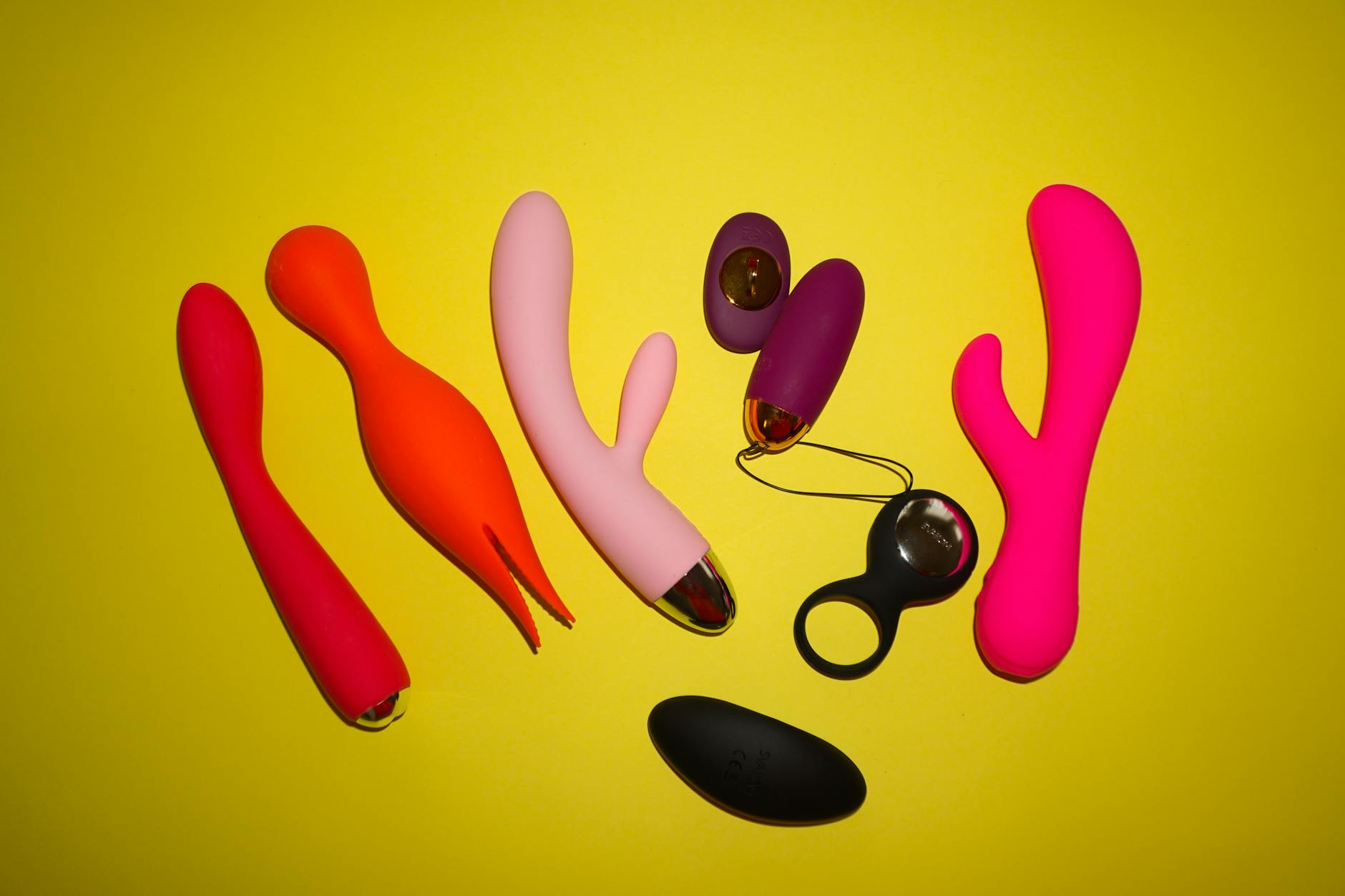
Let's be real about long-term partnerships and desire.
At some point, most couples notice it. The sex becomes functional. You know each other's bodies so well that novelty evaporates. And because you're comfortable, talking about it feels awkward in a way it didn't in year two.
Here's what's actually happening: you're not broken, and neither is your relationship. You've entered what therapists call the "stability phase," where comfort can flatten excitement if you don't actively tend it. The good news is that lemon vibrators from Hellanancy's Lemons can be the exact tool that breaks that pattern. Not by replacing your partner, but by giving you both permission to say "I want this different now."
Why couples avoid toys after years together.
There's a specific fear that shows up in my office consistently. Long-term partners worry that introducing a toy signals failure. "If we needed this, wouldn't we have wanted it earlier?" Or the flip side: "Does this mean my partner isn't enough for me?"
Neither is true. What's actually true is that desire changes. Hormones shift. Bodies age. Work stress accumulates. And sometimes you need a tool that focuses stimulation in a way fingers or friction alone can't deliver. Adding a clitoral vibrator doesn't downgrade your partnership. It upgrades your pleasure.
The couples who integrate toys successfully usually report two things: better orgasms and better communication. Because using a vibrator together requires you to say what you want out loud. "I like this pattern." "Try it on this setting." "A little slower." Suddenly you're speaking the language of pleasure again instead of assuming.
The three conversation stages before you buy anything.
Introducing a lemon vibrator to a long-term partner works best when the idea doesn't arrive cold. Here's how to navigate it:
Stage one: Curiosity, not pressure. Start casually. "I've been reading about how couples use toys to reconnect, and I'm curious what you think." Not: "We need to fix our sex life." The frame matters.
Stage two: Listen more than you talk. If your partner says no, ask why. Is it religious? Does it feel emasculating? Are they worried about pain or sensation? Different concerns need different reassurance. A partner worried about overstimulation needs to know that lemon vibrators let you choose intensity. A partner anxious about being "replaced" needs to know that toys are foreplay, not the main event.
Stage three: Bring actual information. Don't just say "there are vibrators." Tell them you're interested in trying a lemon clitoral vibrator specifically because the suction design feels gentler than traditional vibration and gives you a different sensation. Make it concrete. Specificity feels less scary than vague exploration.
How to use a lemon vibrator together as a long-term couple.
Once you've both agreed to try, the mechanics matter.
Start with solo exploration first. Even though you're doing this together, let each partner get comfortable with the vibrator alone. You'll learn what patterns feel good, what intensity levels work, and you'll lose the self-consciousness of being watched while figuring it out. Ten minutes solo is worth an hour of awkward trying together.
Then, integrate it slowly into foreplay. Your partner can hold the lemon vibrator and use it on you, or you can use it on yourself while your partner is inside you or beside you. There's no "correct" shape this takes. The point is that your partner is engaged, present, and contributing to the pleasure.
Use it as a cue for communication. When your partner is using the vibrator on you, you're telling them in real time what works: "A little to the left." "That pattern again." "Slower." This kind of directional feedback is gold for couples because you're literally teaching each other how to pleasure you. It kills the assumption-based sex that flatlines long-term relationships.
Don't make it the main event. A lemon vibrator works best as part of foreplay, not the whole story. You still want fingers, mouths, bodies together. The vibrator is the enhancement, the novelty, the thing that reminds you both that pleasure is worth paying attention to.
What to expect the first few times (it won't be perfect).
Okay so here's what actually happens in real bedrooms: the first time is a little awkward. One person feels self-conscious. The toy's noisier than expected. Someone giggles (which is fine, actually). The intensity setting is too high, or too low. You're not sure where it goes or what happens next.
That's all normal. The magic doesn't happen in round one. It happens in round three or round five, when you've both relaxed and you're no longer performing "using a vibrator correctly." You're just using it because it feels good.
Give yourself at least three tries before you decide it's not working. Most couples need a few attempts to find their rhythm.
The second conversation: making it a regular part of your life.
After you've tried it a few times, you need the follow-up conversation. This is separate from the moment itself. Over coffee, not in bed, ask each other: "What was that like for you?" Separately. Not in a performance way. And listen without defending.
Your partner might say: "I felt closer to you." Or: "I liked seeing you enjoy it so much." Or: "It was strange, but I want to try again." All of those are green lights.
If your partner says something like "I didn't like feeling like I wasn't enough," that's information you need to hear. But it's also fixable. You might try using the vibrator together on them next time. You might use it while they're touching you somewhere else. You might use it solo while they watch and touch you. The form can change. The goal is pleasure plus connection.
Why lemon vibrators specifically help long-term couples.
There are a lot of vibrators out there. I mention the lemon clitoral vibrator specifically because the suction mechanism changes the experience. Instead of buzzing friction, you get gentle suction that stimulates the entire clitoral network. For long-term couples, this matters because it's different enough to feel novel without being so intense that it's intimidating.
Also: it's quiet. After years together, you might have kids, roommates, thin walls. A discreet lemon vibrator from Hellanancy's Lemons lets you reconnect without announcing it to everyone else in the house.
The deeper work: pleasure is a practice, not a spark.
Here's the thing nobody tells you about long-term relationships and desire. The "spark" isn't something that just happens. It's something you make. And making it requires showing up, being curious, and saying what you actually want.
A lemon vibrator is a tool. But the real work is the conversation. It's asking your partner what they want. It's telling them what you want. It's being willing to feel vulnerable and silly and clumsy in bed because you're prioritizing pleasure over performance.
Couples who use vibrators successfully aren't couples who had some magic spark that never faded. They're couples who decided that their pleasure mattered enough to ask for it. If you're ready to do that work, a vibrator just makes it easier.
FAQ: Rebuilding intimacy with long-term partners and lemon vibrators.
Will using a vibrator make my partner feel inadequate?
Not if you frame it correctly. A vibrator isn't saying "you're not enough." It's saying "I want more sensation, and I want us to explore that together." The difference is all in how you talk about it. If your partner has insecurity about this, the conversation matters more than the toy. Some partners feel more confident when they're the one holding and controlling the vibrator. Others need reassurance that you still want them. Ask. Listen. Adjust.
How often should couples use a lemon vibrator together?
There's no rule. Some couples use one every time. Others save it for weekends when they have more time and fewer interruptions. Others use it once a month as a reset button. What matters is that you both want to. If one partner feels pressured, resentment builds. Check in. Make it mutual.
Is it weird that my partner wants to use the vibrator on me every time we have sex now?
Nope. It means they like seeing you enjoy it and it's become part of your pleasure pattern. That's actually a win. They're engaged, they're focused on your pleasure, and you're getting what you want. The only "weird" is if someone feels left out or bored. If that happens, try switching. Use it on them. Or use it solo while they do something else. Variation keeps it fresh.
Should we keep the vibrator out on the nightstand or hidden?
Whatever works for your household. No judgment either way. If you have kids or roommates, hidden is probably easier. If it's just you two, out and accessible means you're more likely to use it. Some couples like the visual reminder that pleasure is part of their life together. Others prefer privacy. There's no correct answer.
What if one partner wants to use it and the other really doesn't?
Then you have a choice: accept that your partner isn't into it, or do it solo. Forcing a reluctant partner into sex toy use is a relationship problem, not a toy problem. What you actually need is more conversation about what's making them resistant. Is it a values thing? A sensation thing? A body image thing? Once you understand the real barrier, you can address it. Sometimes that means the vibrator doesn't come into the bedroom. Sometimes it means your partner gets more comfortable over time. Both are okay.
Can using a lemon vibrator together after years of not using toys actually rebuild real intimacy?
Yes, but not magically. The vibrator is a tool for communication and novelty. The actual intimacy rebuilding happens in the conversation, the vulnerability, the willingness to say "I want to feel good, and I want you to help me." If you're using the vibrator to avoid deeper relationship problems, it won't fix those. But if you're using it as a way to restart the pleasure conversation with your long-term partner, it genuinely works. Most couples who introduce toys report feeling closer, not just physically but emotionally.
The real reset button.
Long-term partnerships don't die because the spark was never real. They flatten because somewhere along the way, you stopped asking for what you wanted and your partner stopped asking too. A lemon vibrator can't fix that on its own. But it can be the thing that gets you both to speak again. And sometimes that conversation is the whole point.