
Let's name what's actually happening
After five, ten, fifteen years together, sex stops feeling like discovery and starts feeling like maintenance. You know the rhythm. You know what works. You know you should want it. And somewhere in that knowing, the spark gets snuffed out.
This isn't a failing. It's what happens when novelty gets replaced by predictability, when arousal becomes an obligation you schedule around work and kids and the state of the kitchen.
Why pleasure dies in long-term relationships
Here's the uncomfortable truth that no one talks about at the dinner table: the brain stops releasing dopamine for familiar things. That's not romantic failure. That's neurobiology. The same partner, the same touches, the same positions, the same outcome. Your nervous system gets bored before your heart does.
Add in the fact that long-term couples often stop asking for what they actually want. You settle into a rhythm that's "fine." Fine becomes the enemy of great. Fine means you're not disappointed, but you're also not excited. Fine is the death of eroticism.
Most people I work with don't leave because sex is bad. They leave because sex became invisible. They stopped thinking about it, wanting it, planning for it. It became something that happened to them rather than something they chose.
The real role of a lemon vibrator in rekindling desire
A lemon clitoral vibrator isn't going to magically fix a relationship. But it can interrupt the pattern. It can say "we're trying something different." And sometimes that permission to be different is all the nervous system needs to wake up.
When you've been with someone for years, introducing a lemon vibrator into sex isn't about saying "what we've been doing isn't enough." It's about saying "I want to explore this with you." That shift from passive acceptance to active participation changes the entire dynamic.
For people assigned female at birth, there's another layer: clitoral stimulation often gets deprioritized in long-term partnered sex. By year five, you've probably stopped asking for it. Your partner has probably stopped thinking about it. A lemon sucker designed specifically for clitoral pleasure puts your pleasure back at the center of the conversation.
How to introduce it without awkwardness
Don't ambush your partner with it. Have the conversation before the bedroom. Something like: "I've been thinking about how we could make sex feel more exciting for both of us. I found this lemon vibrator that's designed for clitoral stimulation. Would you be interested in trying it together?"
That's it. No apologies, no disclaimers about whether your partner is "enough." You're not criticizing what's been happening. You're inviting something new.
If your partner hesitates, that hesitation is usually about one of three things: they're worried it means you're unsatisfied (reassure them that you're looking to add, not replace), they're nervous about their own performance (explain that vibrators don't replicate what they do, they just add a different sensation), or they're uncomfortable with the idea of toys generally (that's worth a separate conversation).
The actual mechanics of using a lemon vibrator together
Start with foreplay that feels normal. You don't need to jump straight to the toy. Let arousal build naturally, the way it would without it. Once you're both engaged and you've established that this is happening, introduce the lemon vibrator.
If you're using it solo first to get comfortable with the sensation, that's valid. Some people want to know how it feels before inviting a partner to use it on them. The Lem, for example, uses gentle suction rather than traditional vibration, so the sensation can feel different from what you might expect. Spend five or ten minutes alone with it. Find the pattern that works for you. Figure out the pressure level that doesn't feel overwhelming.
When you bring it into partnered sex, communication matters more than ever. Tell your partner what feels good. "A little slower," "more to the left," "that pressure is perfect." Most people use toys passively, receiving stimulation without directing it. You'll feel more pleasure if you stay active in the process.
If you're using a lemon clitoral vibrator with a partner inside you, start with lower intensity. Let your body adjust to both sensations simultaneously. Build from there. Some people find that clitoral stimulation during penetration shortens the time to orgasm significantly. Others find that it shifts the quality of the orgasm entirely. There's no "right" outcome. Your outcome is the right one.
Why this actually rebuilds intimacy
Long-term couples often think that trying something new is a risk to intimacy. They think it threatens what they've built. The opposite is true. Stagnation kills intimacy. Trying something together, being vulnerable enough to admit that you want something different, that's what actually builds connection.
When you use a lemon vibrator with someone you've been with for years, you're not just adding physical sensation. You're adding attention. You're saying "I'm interested in your pleasure." You're breaking the autopilot mode that kills desire.
There's also an element of novelty that your brain genuinely needs. Not because your partner isn't enough. Because novelty itself is a neurochemical event. It releases dopamine. It makes you feel alive in the bedroom in a way that routine doesn't.
What to do if it feels awkward at first
It probably will. Introducing anything new into long-term sex feels awkward. You've been doing the same thing for so long that deviation feels strange. That strangeness is temporary.
The key is not to abandon it after one use because it felt weird. Give it three or four times. By the third time, your body stops treating it like an intrusion and starts treating it like part of the experience. Your nervous system settles into it.
If it continues to feel off after multiple attempts, the issue might not be the vibrator. It might be that you need to talk more deeply with your partner about what changed, what you each want, whether you're still aligned. That conversation is harder, but it's also more valuable than any toy could be.
The shift from obligation to desire
Once you've used a lemon clitoral vibrator a few times and your body starts responding more readily, something shifts. You stop dreading sex. You start thinking about it. You start anticipating it. That anticipation is the opposite of obligation.
When anticipation comes back, foreplay extends naturally. You touch each other more before you get to the main event. You text about it during the day. You make space for it mentally, not just physically. Sex stops being something you fit into the schedule and becomes something you want to make time for.
This doesn't happen overnight. But it happens. And it usually happens not because the lemon vibrator is magical, but because you decided together that your pleasure mattered enough to try something different.
The maintenance question
Long-term relationships need ongoing novelty, not constant novelty. You're not going to introduce a new toy every month. But you might use the lemon vibrator sometimes and leave it aside other times. You might vary when you use it, how you use it, what you pair it with. That variation is enough to keep your nervous system from going back to autopilot.
Some couples find that having a few different toys gives them the flexibility to choose based on mood. Others find that one good tool, used thoughtfully, is all they need. Neither approach is wrong. The only wrong approach is assuming that one conversation or one toy will permanently fix desire. It won't. But it can be the start of a pattern where you keep choosing each other, keep trying, keep staying curious about what else is possible together.
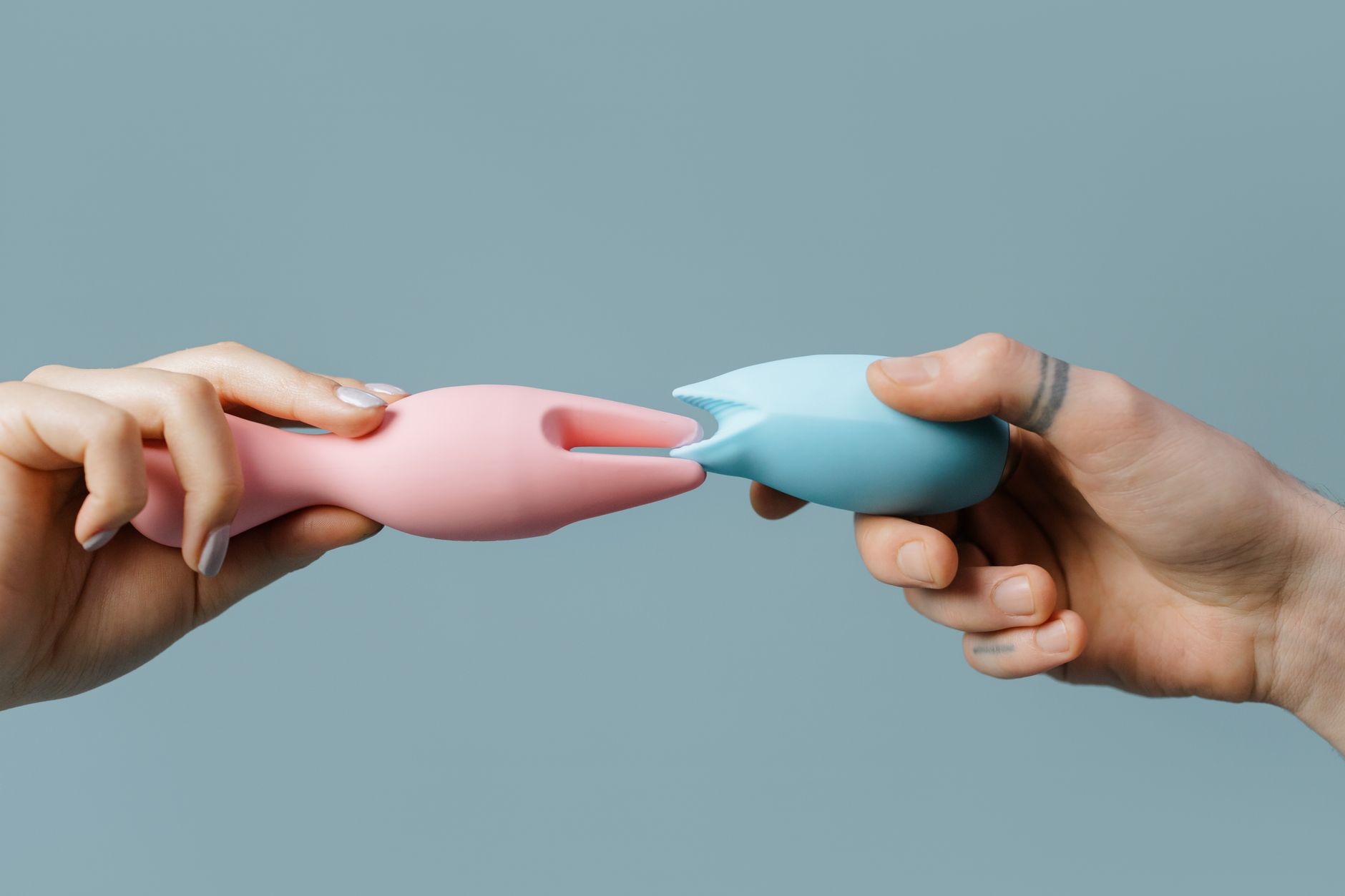
Photo by cottonbro studio on Pexels
FAQ: Long-term relationships and lemon clitoral vibrators
What if my partner thinks using a lemon vibrator means they're not satisfying me?
This concern comes up constantly, and it's worth addressing head-on. A lemon clitoral vibrator does something different than partnered sex does. It's not better or worse. It's different. Some people compare it to the difference between a massage and a back scratch. Both feel good. They feel good in different ways. You probably want both. Frame it that way. "This adds something we can't replicate with just our bodies." That's not criticism. That's just biology.
Can I use a lemon sucker toy solo and still benefit in partnered sex?
Absolutely. Solo use actually teaches you what your body responds to. You get comfortable with the sensation. You figure out which patterns feel best. You learn your own pleasure. Then you can bring that knowledge into partnered sex. You're not starting from zero. You're starting from "I know what I like, and I want to share it with you." That's stronger than figuring it out together in the moment.
How often should we use a lemon vibrator to keep things fresh?
There's no magic frequency. Some couples use it every time. Others use it once or twice a month. It depends on what keeps desire alive for both of you. If using it every time stops feeling novel and becomes routine again, ease back. If you find that you're craving it, use it more. The point isn't consistency. The point is that it remains a choice, not an obligation.
What if we use a lemon clitoral vibrator and orgasm happens very quickly?
That's actually common. When clitoral stimulation is direct and consistent, some people reach orgasm faster than they're used to. That's not a failure. You have a few options: you can stop beforehand and return to other kinds of stimulation, you can use lower intensity, or you can let it happen and enjoy that your body is responding. There's no obligation to make sex last a certain amount of time. Quality matters more than duration.
Can long-term couples maintain desire without adding toys?
Yes, absolutely. But it requires active, ongoing effort. You need regular conversations about what you each want. You need to stay curious about each other. You need to prioritize novelty in other ways: different times of day, different settings, different types of touch. A lemon vibrator is just one tool. The real work is deciding together that maintaining desire matters. The tool is just one way to support that decision.
Is it normal for one partner to want a lemon vibrator and the other to be resistant?
Completely normal. People have different comfort levels with new experiences. The key is not to pressure. Explain why you're interested. Listen to their concerns without getting defensive. Give them time. Sometimes resistance softens once someone understands the actual motivation. And sometimes it doesn't. That's also okay. You're building a life together, not forcing unanimity on every choice.
The real shift happens before the vibrator
What changes when long-term couples reconnect isn't the toy itself. It's the decision that your shared pleasure is worth paying attention to. It's the willingness to have an awkward conversation. It's the vulnerability of saying "I want more" or "I've been bored too." The lemon clitoral vibrator is just the physical manifestation of that choice.
If you're feeling like sex has become a chore after years together, you're not alone. Most long-term couples hit this point. The couples who move through it are the ones who decide that stagnation isn't acceptable. They choose to try something. They choose to talk about it. They choose each other again, deliberately, not by default.
Want to dig deeper into rebuilding connection in long-term relationships? How to Use a Lemon Vibrator When You're Newly Single After Divorce explores rediscovery after major transitions. And if you're wondering whether your partner's hesitation is about the toy or about the relationship itself, How to Introduce a Lemon Vibrator to a New Sexual Partner Without Awkwardness walks through conversations that build trust first.
Your pleasure matters. The person you're with matters. The decision to keep trying together matters most of all.