
Let's name what's actually happening
Here's the thing. Your brain floods with cortisol the moment you're about to come. Your partner's phone buzzes nearby and suddenly you're spiraling. You can't stop wondering if they're actually into this, if they're bored, if you're taking too long. Pleasure evaporates. Anxiety takes over. This isn't a flaw in your sexuality. This is anxious attachment hijacking your nervous system mid-intimacy.
Anxious attachment patterns show up during sex in specific, predictable ways. Your mind leaves your body and camps out in your partner's head, scanning for signs of rejection or disconnection. The physical sensation becomes background noise. What you're actually hyperaware of is whether your partner still wants you. That's not a pleasure problem. That's a nervous system problem.
The good news: a lemon vibrator, used intentionally, can become a tool for rewiring this pattern.
Why anxiety hijacks pleasure in the first place
When you have anxious attachment, your nervous system learned early that connection is unpredictable. You had to stay vigilant. You became expert at scanning your partner's face, their tone, their body language for signs that they were pulling away. That hypervigilance kept you safe once. Now it keeps you from feeling anything.
During sex, this shows up as a specific problem. The moment arousal builds, your brain perceives vulnerability. Instead of sinking into sensation, you catapult into checking. Is my partner engaged? Are they still here? Am I doing this right? Each question is a small withdrawal of your attention from your own body. By the time you're close to orgasm, you're not in your body at all. You're in your head, running threat assessments.
A clitoral vibrator like the Lem is useful here because it gives your nervous system a different job to do. Instead of monitoring your partner, your attention has to track the sensation. Suction-based stimulation is particularly grounding because it creates a consistent feedback loop. Your body receives clear, steady input. Your nervous system gets evidence that you're safe in this moment.
Anxiety and the orgasm gap
There's a reason anxious attachment shows up most dramatically when you're close to coming. Orgasm is the moment of maximum vulnerability. Your partner literally sees you lose control. If your early attachment story taught you that vulnerability meant abandonment, that final moment triggers maximum fear.
This is why you might be able to be aroused, even to feel pleasure, right up until the 90-second window before orgasm. Then something shifts. You tense. Your breathing changes. Your mind floods with doubt. Your partner notices the shift. Now they're thrown off too. The whole thing collapses.
Using a lemon vibrator with intention changes this sequence. The specific sensation of suction requires a level of focus that overrides the threat-scanning part of your brain. You can't monitor your partner's facial expression and track the building sensation simultaneously. Your nervous system has to choose. If you deliberately choose the sensation, you create a small window where anxiety has to step back.
How to use a clitoral vibrator when anxiety is in the driver's seat
Three shifts that make this work:
1. Start solo, then bring your partner in
This is not about avoiding intimacy. It's about teaching your nervous system that you can build pleasure safely. Spend 2-3 solo sessions with your lemon vibrator focusing purely on what the sensation feels like. What patterns feel good? What pace? What position in your body gives you the clearest sensation? You're not chasing orgasm here. You're collecting data about what your body actually needs.
Why this matters: when your partner is present, your nervous system immediately shifts into scanning mode. Building a solo reference point gives you something to anchor to. You remember: I know what this feeling is. I've felt it before safely. That memory calms your threat-detection system.
2. Create explicit check-ins that reduce the need for scanning
One of the cruelest parts of anxious attachment is that checking doesn't actually make you feel better. You ask your partner "Are you into this?" They say yes, and 30 seconds later you're asking again. The reassurance has a half-life of about 40 seconds.
Instead, build in structured moments for connection that happen outside of the pleasure-building. Before you and your partner start, spend 3 minutes just touching each other without the goal of arousal. Hold hands. Kiss without urgency. Let your nervous system register: you're here, you're staying. Then agree that you'll check in once, halfway through, before stimulation gets intense. A simple "Still good?" Yes. Done. No more checking needed. Your nervous system has what it needed.
Now when pleasure builds, your brain isn't looking for evidence of disconnection because you already got the reassurance. That frees your attention for sensation.
3. Use the vibrator as a physical anchor
When you use a lemon clitoral vibrator with your partner, the stimulation itself becomes a tether to the present moment. You can't fantasize about whether they're judging you while your nervous system is processing direct, consistent sensation.
Try this: use the Lem on lower settings while your partner is touching you elsewhere, or just present with you. The sensation creates a kind of positive distraction. Your attention has to be in your body because that's where the information is coming in. Your partner can also feel you relax into it. Watching you genuinely present in your own pleasure is actually reassuring to them. Paradoxically, using the vibrator makes you more connected to your partner, not less.
The conversation you need to have first
Honestly though, the vibrator won't work if you haven't done the emotional groundwork. Your partner needs to understand that the checking, the reassurance-seeking during sex, isn't actually about them. It's your nervous system running an old program.
Have this conversation outside the bedroom. Tell them: "When we're intimate, sometimes I get anxious even when I'm enjoying it. I start wondering if you're really here or if you're losing interest. I know logically that doesn't make sense, but my nervous system doesn't care about logic. I want to try something. I want to use a vibrator not instead of intimacy with you, but as something that helps me stay present during it."
Then tell them what you need. That might be: "I need you to touch me while I use it." Or: "I need you to just be in the room with me." Or: "I need one check-in and then silence." Whatever it is, say it clearly. Your partner probably has their own anxiety about whether they're doing it right. Clarity helps everyone.
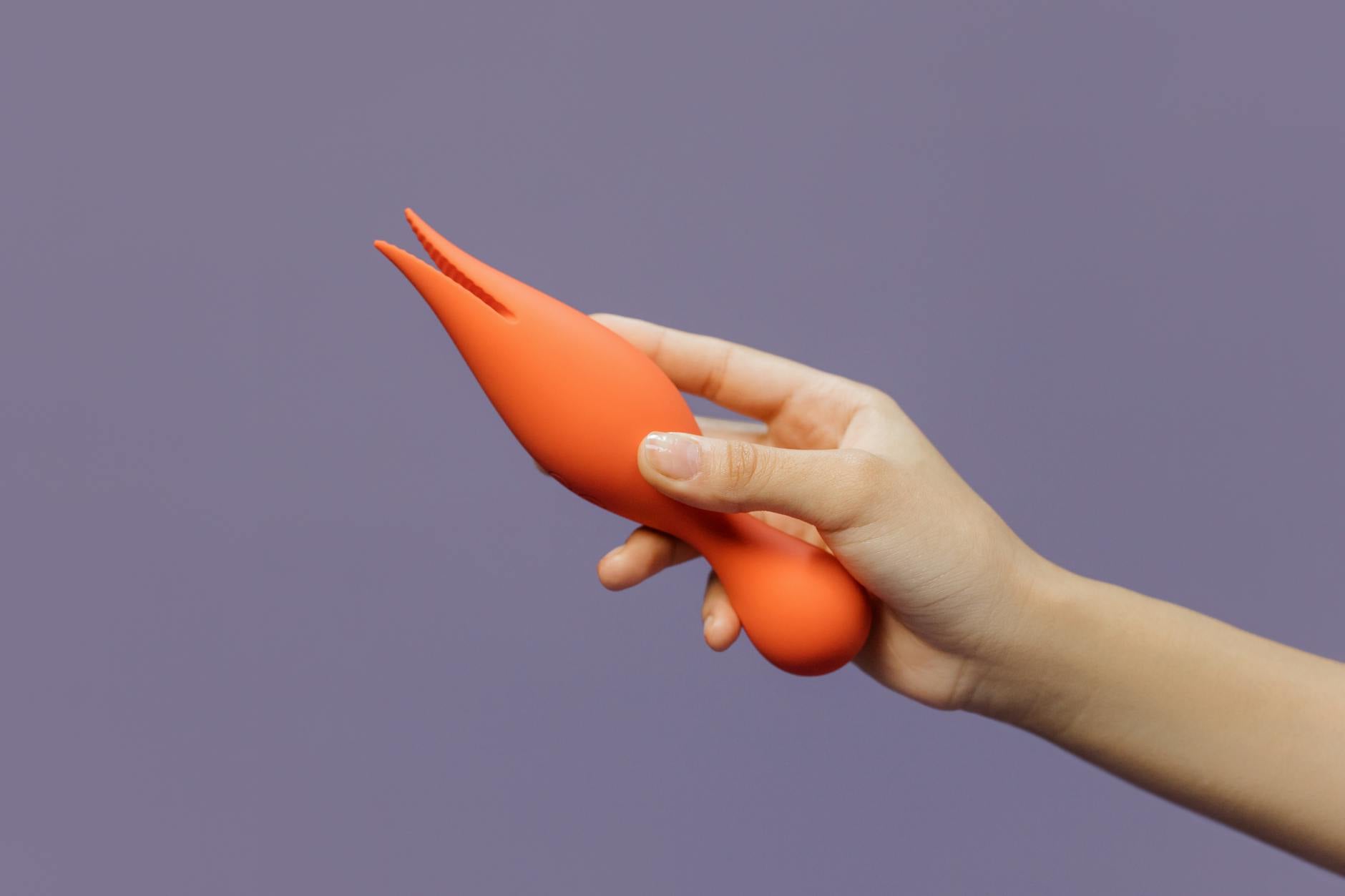
Photo by cottonbro studio on Pexels
The nervous system reset that actually works
Anxious attachment isn't something you fix. It's something you manage by building new evidence. Every time you use a lemon vibrator and actually stay present with sensation instead of disappearing into threat-scanning, you're teaching your nervous system something: pleasure is safe. Vulnerability doesn't mean abandonment. Your partner's presence during your pleasure is connection, not performance.
This requires repetition. One good session doesn't rewire years of attachment patterns. But after 5 or 6 times using a lemon clitoral vibrator where you deliberately stay present, your nervous system starts to relax its vigilance a little. You'll notice the checking urge comes later. You'll notice you can sometimes override it. That's progress.
Many people find that after about 3 weeks of consistent use, the pattern starts to shift. Not because the vibrator is magic, but because you're creating new neural pathways. You're proving to your threat-detection system that you can be vulnerable and safe simultaneously.
When the anxiety is still too loud
If you're trying this and you still can't get out of your head, that's important information. It might mean the anxiety needs professional support before a vibrator can help. Therapy approaches like Emotionally Focused Therapy or Gottman Method work specifically with anxious attachment patterns during intimacy. That's not a failure. That's choosing the right tool for the problem.
You might also need to consider how stress interferes with arousal if life circumstances are cranking up your baseline anxiety. Or explore whether birth control or hormonal changes are amplifying the pattern.
The lemon vibrator works best when your nervous system is in the ballpark of readiness. If you're completely flooded, no vibrator is going to solve it. Get support. Then come back to this.
Pleasure as proof
Here's what actually changes when anxious attachment stops hijacking intimacy. You start to believe, in your body, not just your mind, that your partner chose to be there. You feel it. You experience your own pleasure as something your partner gets to witness and enjoy, not something you're performing for them. You come without running a threat-assessment in the 10 seconds before it happens.
That shift ripples beyond sex. When you prove to yourself that you can be vulnerable and safe with someone, other forms of vulnerability get easier. You can ask for what you need. You can say no. You can believe them when they say they love you, because your nervous system has evidence of it.
A lemon clitoral vibrator won't heal your attachment. But it can be the physical anchor that lets you practice new patterns with your partner. That practice, repeated and intentional, is what actually changes things.
People also ask
Can anxious attachment improve with just using a vibrator alone?
A lemon vibrator can help build the neural pathways for staying present during pleasure, but attachment patterns live in relationships. Lasting change requires both solo practice and consistent, safe connection with your partner. The vibrator is a tool for that connection, not a replacement for it. If you're working with a therapist on attachment patterns, mentioning that you're using a vibrator as a grounding tool can help them understand your self-awareness about the pattern.
How often should I use a lemon clitoral vibrator if I have anxious attachment?
Consistency matters more than frequency. Two or three times per week for 3-4 weeks is better than once a month. Your nervous system learns through repetition. The goal is to build enough evidence that pleasure and vulnerability are safe that the pattern starts to relax. After the initial month, you might find you naturally use it less because the anxiety is less intrusive.
What if my partner feels threatened by me using a vibrator?
That's worth a conversation outside the bedroom. Some partners have their own attachment stuff triggered by vibrators, often rooted in feeling like they're "not enough." You might tell them: "I'm using this because I want to be more present with you, not less. When I'm stuck in my anxiety, I'm not actually with you anyway. This helps me come back." If the resistance persists and feels rigid, couples therapy is probably the right move before continuing.
Is the Lem specifically good for anxious attachment?
The Lem's suction-based design creates very consistent, focused sensation that's hard to ignore. That makes it particularly good for nervous system regulation. The feedback loop is immediate and clear. That said, any lemon vibrator that creates focused stimulation can work. What matters is finding one that gives you enough sensation that you have to pay attention.
Can I use a lemon sucker during partnered sex if I have anxious attachment?
Absolutely. Many people find that using a vibrator while their partner is inside them, or while they're touching in other ways, actually deepens the sense of connection. You're not replacing partner contact. You're adding a sensory anchor that keeps you present during it. Some couples find this is the first time they actually feel connected during sex because the person with anxious attachment is finally in their body.
How do I know if my anxiety is attachment-related or something else?
Attachment anxiety during sex usually follows a specific pattern: you feel fine until arousal builds, then your mind pulls out and starts scanning your partner. You're looking for signs of boredom, disconnection, or judgment. If your anxiety is more free-floating (nervous about your body, worried about performance in general), that might be a different thing. Both can show up in sex, but they need different approaches. A therapist can help you figure out what you're actually dealing with.
The real work
Using a lemon vibrator when anxious attachment is interrupting pleasure is useful. But it's not the cure. The cure is building new evidence, again and again, that you can be vulnerable and safe. That your partner can see your pleasure and stay. That desire doesn't disappear when things get intimate.
The vibrator is just the thing that lets your nervous system stay long enough to collect that evidence. The real work is your willingness to try, even when your brain is screaming that this is dangerous. That's the brave part. The vibrator is just the tool.
If you're ready to explore this more, or if you need support untangling what's actually driving the anxiety, reach out. We're here.