Let's be real about what menopause actually does to arousal
Menopause doesn't kill your ability to feel pleasure. What it does is slow down the chain reaction that gets you there. Estrogen drops. Blood flow to the genitals takes longer to build. The tissue gets thinner. Your brain might be totally interested, but your body's sending back a "slower, please" message.
Here's the thing nobody tells you: that's not a problem you solve. It's a rhythm you adjust to. And once you do, the pleasure often gets deeper, not shallower.
Why arousal slows after menopause
Three physiological changes happen at once. First, estrogen decline means less blood vessel response. When you're aroused pre-menopause, blood rushes to your genitals in minutes. Post-menopause, it's more like 15 to 25 minutes. Second, your clitoris has less tissue padding around it, so direct pressure can feel too intense or even uncomfortable. Third, your nervous system itself changes how it processes pleasure signals. It's not that the nerves stop working. They just work at a different tempo.
The good news: your clitoris still has 8,000+ nerve endings. The capacity for orgasm is completely intact. You just need tools and techniques that work with your new arousal timeline, not against it.
Why lemon vibrators work differently after menopause
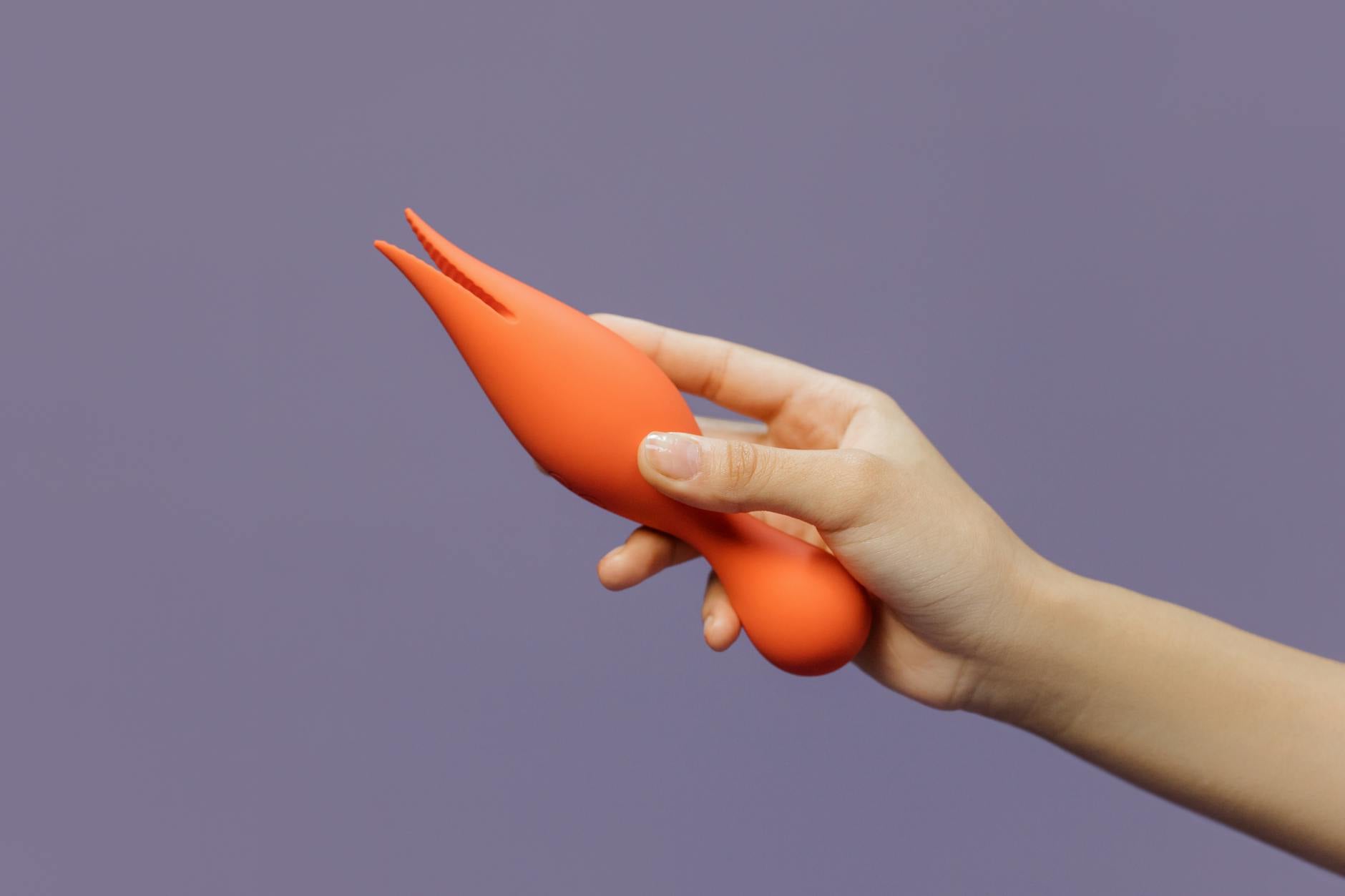
Clitoral suction toys like the lemon vibrator operate on a principle that's genuinely better suited to post-menopausal bodies than traditional vibrators. Instead of direct vibration on sensitive tissue, suction works through gentle pressure changes that stimulate the whole clitoral structure. You get broader nerve activation without the intense friction that can feel raw or overwhelming on thinner tissue.
The pattern matters too. Most lemon vibrators have multiple intensity levels and rhythms. You can start at pattern 1 or 2 (which traditional vibrators don't even offer) and build slowly. That matches your new arousal pace instead of forcing you to catch up to the toy.
The warm-up timeline that actually works
Forget the "foreplay should take 5 minutes" rule. Budget 15 to 25 minutes before you even touch the lemon vibrator. This isn't extra. It's where arousal actually happens now.
Start with touch that has nothing to do with sex. Massage your own shoulders. Take a bath. Read something that turns you on. Let your mind settle into desire before your body tries to follow.
Then, when you're ready: use lubrication. Water-based is your best friend. Apply it generously. It's not a sign something's wrong. It's you being kind to tissue that's naturally thinner. Silicone lube feels richer, but it can damage silicone toys, so stick with water-based.
Now start with the lemon vibrator on the lowest setting. Many people assume they need high intensity. You don't. Lower intensities on a clitoral suction toy often feel more satisfying than aggressive settings because they let sensation build gradually instead of plateauing fast.
Positioning and pressure for comfort
Angle matters way more after menopause. You're not trying to press hard anymore. You're looking for the sweet spot where suction feels good without pressure.
Place the lemon vibrator at an angle, with the suction cup sitting just over the clitoral head. Not directly on it. Slightly off to the side. Gentle pressure. Let the suction do the work. If you feel pain (not intensity, actual pain), stop. That's your signal the angle or pressure isn't right.
Many people find that lying on their back with legs slightly apart works better than sitting up. Gravity helps blood flow without adding your own muscle tension.
Breaking through the arousal ceiling
You might find that sensation builds to a certain point and then plateaus. You're aroused, but not moving toward orgasm. This is normal after menopause and it's fixable.
Three strategies: First, slow down instead of speeding up. If you feel stuck, drop the intensity and wait. Often, releasing pressure lets sensation integrate deeper. Second, shift your breathing. Shallow breathing keeps your nervous system in a lower gear. Deeper belly breaths actually increase blood flow and sensation. Third, add mental focus. After menopause, your brain becomes even more important to arousal than it was before. Stop multi-tasking. Put the phone down. Notice what sensations feel good.
If the plateau persists, check the lubrication. Tissue dries out faster after menopause, even mid-session. Reapply. Then restart at a lower intensity.
When sensation still feels muted
If you've given yourself time, you're using the right tools, and sensation still feels distant, this might be a sign to talk to a doctor. Genitourinary syndrome of menopause (GSM) is real and it's treatable. Topical estrogen creams applied directly to the tissue can change everything in a few weeks. They have minimal systemic absorption, so they're safe for most people. A menopause-trained GP or gynaecologist can prescribe them.
If desire itself has disappeared (not just arousal difficulty, but zero interest), that's worth discussing too. Testosterone therapy is available, though it's prescribed more conservatively in some countries. For the right person, it's life-changing.
The emotional shift that changes everything
Here's something nobody talks about: menopause often removes permission obstacles you didn't even know you had. For decades, you might have been managing a partner's needs, monitoring your fertility, or performing arousal you weren't feeling. Menopause ends that. The fertility clock stops. The hormonal cycles that were orchestrating your sexuality vanish.
Many of my clients find their most intense orgasms come after menopause, not because the body is more capable, but because the brain is finally free. You're not performing. You're not protecting anyone else's ego. You're exploring your own pleasure on your own timeline.
Lemon clitoral vibrators are excellent for this because they put control in your hands. You set the pace. You choose the intensity. You're not waiting for a partner to read your signals. You're directly communicating with your own body about what feels good.
Why patience with the process matters more than urgency
If you've just entered menopause and arousal feels different, your first instinct might be to "fix" it fast. Resist that. Your body isn't broken. It's recalibrating. Give yourself at least two to four weeks of consistent exploration before you decide something isn't working.
Try different times of day. Arousal patterns shift post-menopause. Morning might feel better than night, or vice versa. Try different settings for relaxation. Some people find that menopause arousal needs more mental space and fewer distractions.
And try different approaches with the lemon vibrator itself. Maybe pattern 3 feels better than pattern 1. Maybe you need even longer warm-up. Maybe you need to combine clitoral stimulation with penetration, or the reverse. This isn't failure. It's you getting to know your own body again.
Your pleasure matters. It's not diminished. It's reorganized. And often, once you stop fighting the new rhythm, it becomes richer than what came before.
FAQ: Questions people actually ask about lemon vibrators and menopause
Can you use a lemon vibrator if your tissue is thin from menopause?
Yes. In fact, lemon clitoral vibrators are often better for thin tissue than traditional vibrators. Suction-based stimulation activates nerves without the aggressive friction that can feel uncomfortable on delicate tissue. Just use water-based lubricant and start at lower intensities. If you feel pain (not intensity, pain), adjust the angle or pressure.
How long should warm-up take after menopause?
Plan for 15 to 25 minutes before you use the lemon vibrator. This isn't punishment. This is where arousal actually builds now. Mental relaxation, physical touch, lubrication. Then use the toy. Rushing this phase is why people think something's wrong with them. Nothing's wrong. Your timeline just changed.
Does lemon suction work if you've lost sensation down there?
Often yes, because suction activates a different set of nerve pathways than direct vibration. But if sensation is genuinely muted, see a doctor. This might be genitourinary syndrome of menopause (GSM), which is highly treatable with topical estrogen. Once that's addressed, lemon vibrators typically work much better.
Can you still have orgasms after menopause with a lemon vibrator?
Completely. Most people do. Your orgasm might feel slightly different (sometimes shorter, sometimes more diffuse) but it's absolutely there. The clitoris doesn't lose its capacity to orgasm. You just need to give arousal the time it needs and use a tool that matches your body's new sensitivity.
What if you need more intensity as you get older?
That's different from needing intensity right after menopause. Some people do want more intensity over time. The lemon vibrator has multiple patterns and intensities specifically for this. You can explore higher settings once arousal is fully established. Start low and build, though. Jumping straight to maximum intensity usually backfires.
Is it normal to feel disconnected from pleasure after menopause?
It's common enough that many people report it, but it's not inevitable. Sometimes it's hormonal (treatable). Sometimes it's about losing your arousal rhythm and needing to rebuild it (fixable with the strategies here). Sometimes it's emotional or relational (worth exploring separately). The key is not assuming it's permanent or that you're broken. Many people rebuild pleasure that's as intense or more intense than before, once they understand their new arousal timeline and use the right tools.
You're not broken. You're transitioning.
Menopause shifts your sexuality. It doesn't end it. The lemon vibrator works so well for post-menopausal bodies because it's designed for gradual stimulation, sensitive tissue, and rhythmic pleasure. Paired with patience, lubrication, and the understanding that arousal just takes longer now, it becomes a way back to sensation that often feels deeper and more intentional than before.
If you want to explore how this works for your specific situation, reach out to us. We're here to answer questions without judgment.