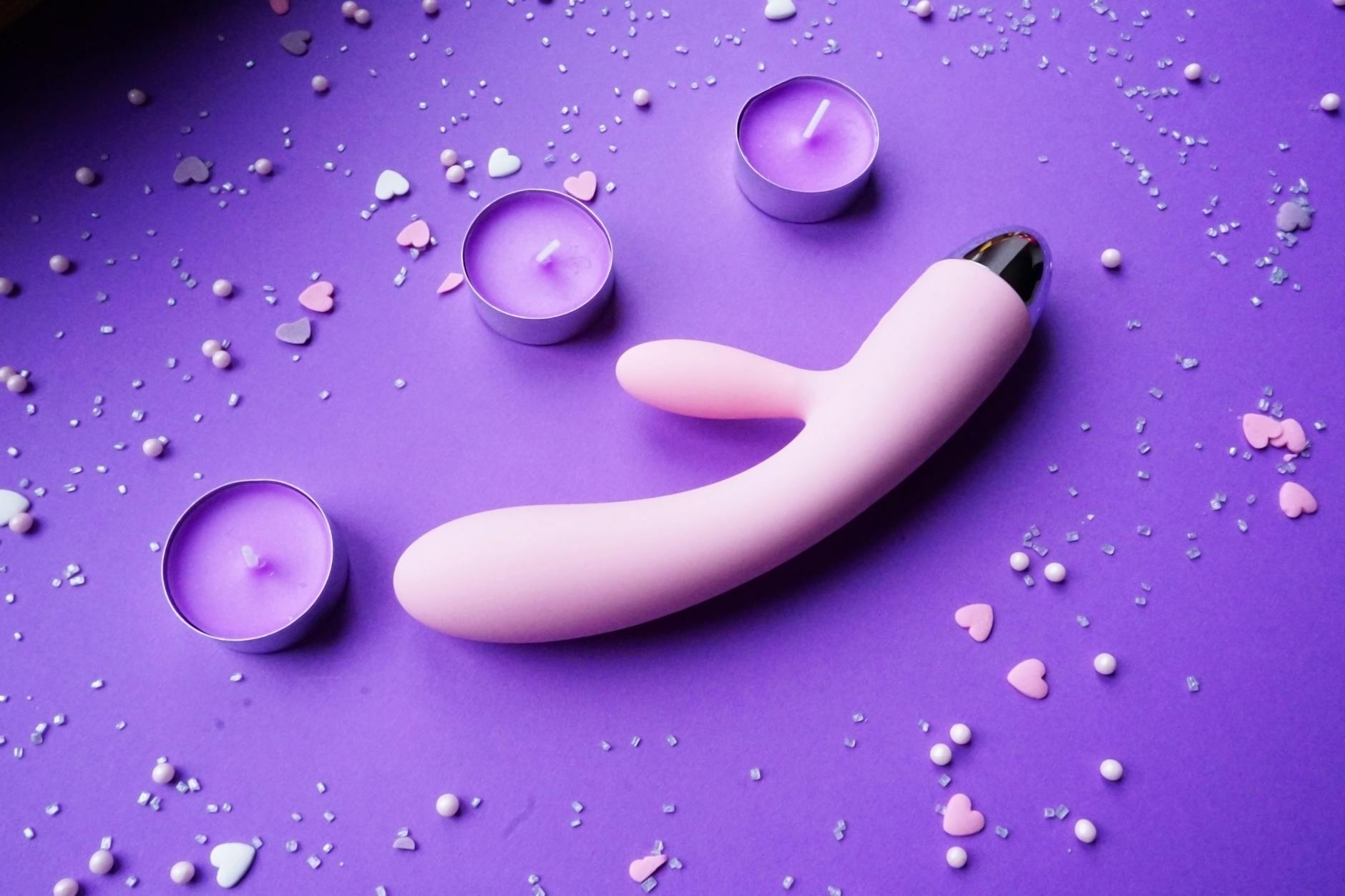
Anxiety doesn't care what your body is capable of
You know the feeling. Your partner is present, the moment is right, and your brain decides it's the perfect time to run through your work emails, your grocery list, and three different ways you might be disappointing someone. Your body checks out. The sensation that should feel amazing feels numb. Nothing happens. And then you're spiraling about nothing happening, which makes it even less likely to happen. This is the anxiety loop, and it's wildly common.
Here's what I see in my practice: the people most frustrated by this aren't the ones with low desire or physical problems. They're the ones whose anxiety has learned to hijack the pleasure response before pleasure even has a chance to start. For them, a lemon vibrator works differently than a traditional toy because it bypasses the mental block entirely.
How anxiety actually stops arousal (the neuroscience part)
When you're anxious, your nervous system activates the sympathetic response. Fight or flight. Your body floods with cortisol and adrenaline. Blood vessels constrict. Arousal requires the exact opposite state: the parasympathetic nervous system, where blood flows outward, muscles relax, and sensation can build.
These two states cannot exist at the same time. Not because you're broken, not because you don't want it enough. Your neurobiology is literally preventing arousal until the threat signal stops.
For many people, anticipatory anxiety does the job. You're already tense before anything physical happens. You're waiting for the feeling that might not come, which prevents it from coming. The pressure itself becomes the problem.
A clitoral suction lemon vibrator interrupts this loop because it does something traditional vibrators can't: it creates a physical sensation so strong and so different from what most people have experienced that it bypasses the anxious brain almost entirely. You can't think about performance when your entire attention is being pulled into an unfamiliar, intensely pleasurable sensation happening right now.
The difference between distraction and redirection
There's a big difference between "stop thinking about anxiety" (impossible) and "your body's attention is being pulled somewhere else so powerfully that anxiety doesn't have bandwidth to run." The second one actually works.
This is why lemon clitoral vibrators with suction technology are specifically useful for anxiety. The sensation is novel enough that it demands presence. You can't autopilot through it. You can't catastrophize about whether you're coming fast enough or slow enough or the right way. You're simply in it, moment to moment.
I often tell clients in my practice: your job isn't to fight the anxiety. Your job is to create an experience that doesn't give anxiety anything to grab onto.
Why traditional vibration doesn't work the same way
A regular vibrator works through repetitive stimulation. It's predictable, which is helpful in some ways. But it also gives your anxious brain time to wander. You can feel the vibration and simultaneously run through all the worried thoughts. The two experiences can coexist.
Clitoral suction technology, like what you get with the Lem, works through a completely different mechanism. It creates a rhythmic pulling sensation that engages the tissue in a way that feels almost involuntary. Your body responds before your brain can intervene with doubt.
That involuntary response is key. When you feel your body responding to something outside your control, it bypasses the self-consciousness that anxiety feeds on. You're not performing. You're not thinking about performing. You're simply experiencing.
The solo play angle
Here's something I see often: people use clitoral suction toys alone first, away from the pressure of a partner's presence, to rebuild trust in their own body's responsiveness. This is genuinely brilliant work.
When you're alone, there's no one to disappoint. No one waiting. No one whose pleasure matters more than your own. The only expectations are yours, which are usually gentler. And in that space, many people discover that their body does respond. The anxiety was real. The dysfunction was actually anxiety-induced, not physiological.
Once you've experienced your own arousal and orgasm without an audience, something shifts. You know it's possible. You've felt it. When you bring a partner back into the picture, you're not starting from scratch convinced it won't work. You're starting from "I know my body can do this; now I'm inviting someone into that."
When anxiety is about your partner
Sometimes the anxiety isn't general. It's specific to your partner or to the dynamic between you two. You might worry about taking too long, or not appearing attracted, or seeming high-maintenance if you need a toy.
If that's the case, a lemon vibrator becomes a tool for communication. When you bring one into partnered play, you're not saying "I can't come without this." You're saying "I want to show you what I like. I want us both to experience me having really good pleasure."
That reframe matters. Using a toy becomes less about what you're missing and more about what you're both getting. And often, watching a partner have an intense response to a lemon suction toy does something a conversation can't: it makes the partner's own arousal spike. You're not solving a problem. You're creating an experience both people want to be part of.
Building tolerance to pleasure again
Some people with significant anxiety around sexuality find that they've spent so long holding themselves back that they actually have to retrain their nervous system to tolerate pleasure. This sounds strange, but I see it regularly.
The anxiety has been so consistent that the nervous system has learned: pleasure leads to shame or disappointment or fear. So it blocks sensation as a protective measure. The solution isn't usually to white-knuckle your way to relaxation. It's to introduce pleasure in a way that feels safe enough that the nervous system gradually learns that pleasure is not a threat.
Using a lemon clitoral vibrator for short, frequent sessions alone can actually rewire this. Five minutes, three times a week, in a space where you feel completely safe. Not aiming for orgasm. Just practice tolerating sensation. Gradually, the nervous system gets the memo: this is safe. We can feel things here.
What to do if you're starting from scratch
If you've been dealing with anxiety-blocked pleasure for a while, here's my practical prescription.
First, solo. Set 20 minutes aside in a space where you genuinely won't be interrupted. Phone away, lock the door, whatever it takes. Use water-based lubricant. Start on the lowest setting of your lemon vibrator, around setting one or two. The goal is not to come. The goal is to notice what sensation feels like. Touch other parts of your body first. Build anticipation. This is about teaching your nervous system that pleasure is available.
Second, when you're ready, bring it into partnered play. You don't need a whole conversation. You can simply show your partner. "I want you to see what this feels like for me." And let them watch, if they want. Let them see your response.
Third, if your anxiety is specifically about your partner, you might consider talking to a relationship therapist or sex therapist who specializes in performance anxiety. The tools I mention here work well, but they work better when the underlying relationship dynamic is secure.
When medication helps
I want to mention something that doesn't get talked about enough. Some people find that short-term anti-anxiety medication or antidepressants actually restore their pleasure response faster than anything else. If you've been dealing with significant anxiety for a long time, it might not be something a toy alone can solve. Talk to your doctor.
This is not a failure. It's practical neurobiology. Sometimes your nervous system needs chemical support to remember how to relax. And once it does, the tools I'm describing here work much better.
The permission you're actually looking for
Here's the thing I tell almost every client who comes to me anxious about pleasure: you don't need permission from your partner or your body or some ideal version of yourself. You need permission from yourself to want this. To invest time in it. To use tools that work.
A lemon clitoral vibrator is one of those tools. It works because it's efficient. Because the sensation is strong enough to pull you into the present moment. Because using it is a declaration that your pleasure matters enough to take seriously.
Anxiety will still show up sometimes. That's not a failure. But with the right support, the right tools, and time, it stops being the main character in your pleasure story.
Frequently asked questions
Can a lemon vibrator actually help with performance anxiety?
Yes. When anxiety blocks arousal, the issue isn't usually physical. It's neurological. A lemon clitoral vibrator works around the anxious brain by creating a sensation so novel and intense that it pulls your attention into the present moment, where anxiety has less room to operate. For many people, the first intense sensation with a suction toy is actually the moment anxiety finally quiets down.
How long does it take before you stop feeling self-conscious using a toy?
This varies wildly, but I usually see a shift within 3-5 solo sessions. Once you've experienced genuine pleasure with the tool alone, the self-consciousness in partnered contexts drops significantly. You're no longer wondering if it will work. You know it does. That confidence changes everything.
Is using a lemon vibrator a sign that something is wrong with me physically?
No. If you can have orgasms alone with a toy but struggle during partnered sex or with anxiety, the issue is almost certainly mental, not physical. Using a tool is actually proof your body is fully capable. You're just working around the mental block.
Should I tell my partner I'm using a lemon vibrator?
That depends on your relationship and the reason you're using it. If you're using it for personal exploration or to manage anxiety, you don't necessarily need to announce it. But if you want to bring it into shared intimacy, honesty generally works better than secrecy. Most partners are relieved to know what helps and glad to participate in something that makes pleasure more likely.
Can lemon suction toys make anxiety worse if I'm really struggling?
Rarely, if the anxiety is severe enough, the intensity of a new sensation can feel overwhelming rather than freeing. If that happens, go slower. Start with the lowest setting for just a minute or two. Or talk to a therapist who can help you work through the anxiety itself first. The toy is a tool, not a cure for clinical anxiety.
What if my anxiety is about whether I'm taking too long to orgasm?
This is specifically where lemon clitoral vibrators shine. Because the stimulation is so intense and efficient, most people experience much faster arousal and orgasm. This isn't cheating. It's not bypassing the "real" response. It's using the right tool for the job. And once you've experienced how good it feels and how fast your body responds, the anxiety often lifts. You know it works. That knowledge is powerful.
The bigger picture
Anxiety is not a character flaw or a sign of dysfunction. It's just your nervous system trying to protect you from perceived threat. The solution isn't to shame it or fight it. It's to create experiences where pleasure feels safe enough that anxiety gradually learns to stand down.
A lemon vibrator is one tool for that. A good therapist is another. Honest communication with a partner is another. The goal isn't to become someone who never feels anxiety. It's to build a relationship with your own pleasure that's strong enough to exist alongside anxiety, and eventually, to render the anxiety less important than the sensation happening right now.